A potato carrier nearly knocked me off the narrow pathway. To be fair, it was entirely my fault. The moment I stepped into Shillong’s Bara Bazaar, my eyes were darting in every direction. One moment I was following a fragrance wafting through the air; the next, I was mesmerised by heaps of turmeric, some bright yellow, others almost orange. Then there was the irresistible aroma of food being cooked somewhere nearby. Concentrating on where I was walking was simply impossible.
The potato carrier, a middle-aged man balancing two bulging sacks of potatoes from Jowai on a bamboo pole across his shoulders, was moving with remarkable ease through the crowded market. He seemed perfectly in rhythm until he spotted me: clearly lost, distracted, and standing exactly where I shouldn’t have been. The slight jolt he gave me was enough to bring me back to reality.
That brief collision became my introduction to Bara Bazaar. If you stand still here, even for a few seconds, you become an obstacle. Everything around you is in motion.
Long before most of Shillong stirs awake, Bara Bazaar, known locally as Ïewduh is already at work. Trucks, and more trucks, squeeze into the market, leaving barely enough room for pedestrians to edge through the narrow lanes. Jeeps arrive piled impossibly high with sacks of vegetables, spices and produce from villages across Meghalaya, while mini-trucks queue up one behind another, unloading the day's harvest with astonishing speed.
I arrived early enough to witness the scene out outside the market. It’s a carefully choreographed chaos that unfolds. Drivers call out instructions, porters weave effortlessly through the crowds with impossible loads balanced on their backs, shopkeepers direct deliveries and vendors hurriedly arrange their wares before the first customers arrive. The roar of engines, the scrape of metal, the thud of sacks hitting the ground and the constant chorus of bargaining create a soundtrack so loud that holding a phone conversation is nearly impossible. Yet there is nothing disorderly about it. Every person seems to know exactly where to go, what to carry and when to move.
It is only later that I realise Ïewduh is much more than Shillong’s largest trading hub. For the local people, this market is deeply connected to memory and belief.
Khasi oral traditions trace the shifting of Ïewduh to the reign of Syiem Miet Sing, the traditional chief of Hima Mylliem, one of the Khasi customary states in present-day Meghalaya. The Syiem was not merely a symbolic leader but the custodian of the community's administration, land and traditional institutions. The move of the market to its present location was later reaffirmed by his successor, U Kyrshap.
But Ïewduh is not just defined by its location or history of trade. It is considered a Ïew-Niam—a market established through sacred rites and ceremonies. Khasi belief holds that U Blei, the Creator, established the ïew as a place where people could meet their needs and support one another. Some oral traditions trace the idea of the marketplace even further back, to the time when the Hynniewtrep—the ancestors of the Khasi people—were believed to have lived among the nine clans in heaven, where U Blei had already created a market for them.
That connection between the spiritual and the everyday remains visible even today. Amid the rows of vegetable sellers, spice traders and bustling shops stand the mawbynna—memorial stones associated with the Syiem and elders of Hima Mylliem. These stones bear witness to the market’s older traditions, and even now, traditional offerings are made here during winter by representatives of the Mylliem region.
Perhaps this is what makes Ïewduh unlike any other market. Spread across thousands of shops, stalls and trading spaces, it is one of Northeast India’s largest traditional markets, where generations of vendors have exchanged everything from vegetables and spices to fish, textiles and forest produce. Here, ancestral stones stand alongside delivery trucks, ritual practices exist beside everyday bargaining, and the produce of Meghalaya’s hills arrives each morning into the heart of Shillong.
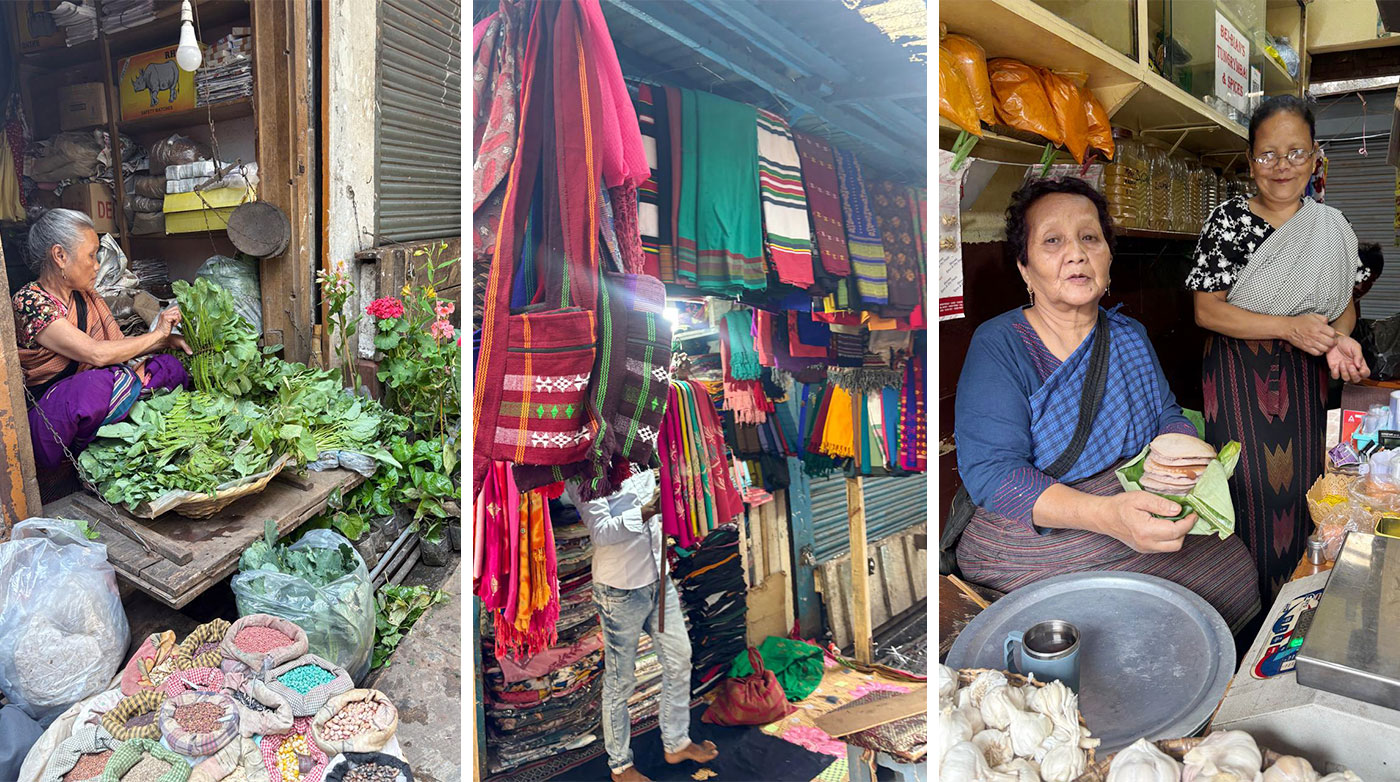
At Shop No. 177B, I stop at the stall of 70-year-old Bibian Rynbai, who has been a familiar face in Ïewduh for more than four decades. Every morning, except Sundays, she leaves her home in Lower Mawprem and arrives at the market by 8 a.m., ready for another day of trade.
“I come here every day”’ she says with a smile. A cup of red tea and a snack, and then the market takes over.
ˇˇShe offers me a cup, and I happily accept. Sitting there for a few moments, sipping warm tea as the market rushes around us, I catch a glimpse of the rhythm that has shaped her life for so many years.
From Bibian, I buy a kilogram of small, intensely fragrant ginger—the roots far more powerful in aroma than their humble appearance suggests. She tells me they have come from Jowai, a region known for the quality of its produce. The headquarters of Meghalaya’s West Jaintia Hills district, Jowai lies about 64 kilometres from Shillong, perched on a plateau nearly 1,380 metres above sea level. Surrounded on three sides by the Myntdu River, the region’s fertile red lateritic and clay-loam soils, rich in organic matter despite their natural acidity, nurture some of Meghalaya’s finest crops. It is this unique landscape that gives Jowai’s ginger and garlic their distinctive sharpness, fragrance and depth of flavour.
As I begin packing the ginger into my bag, I realise that my interaction with Bibian is becoming more than just a purchase. It is a small moment of connection. In markets like Ïewduh, exchanges are rarely only about money—food, stories and kindness often pass from one person to another, making the experience as memorable as the ingredients themselves.
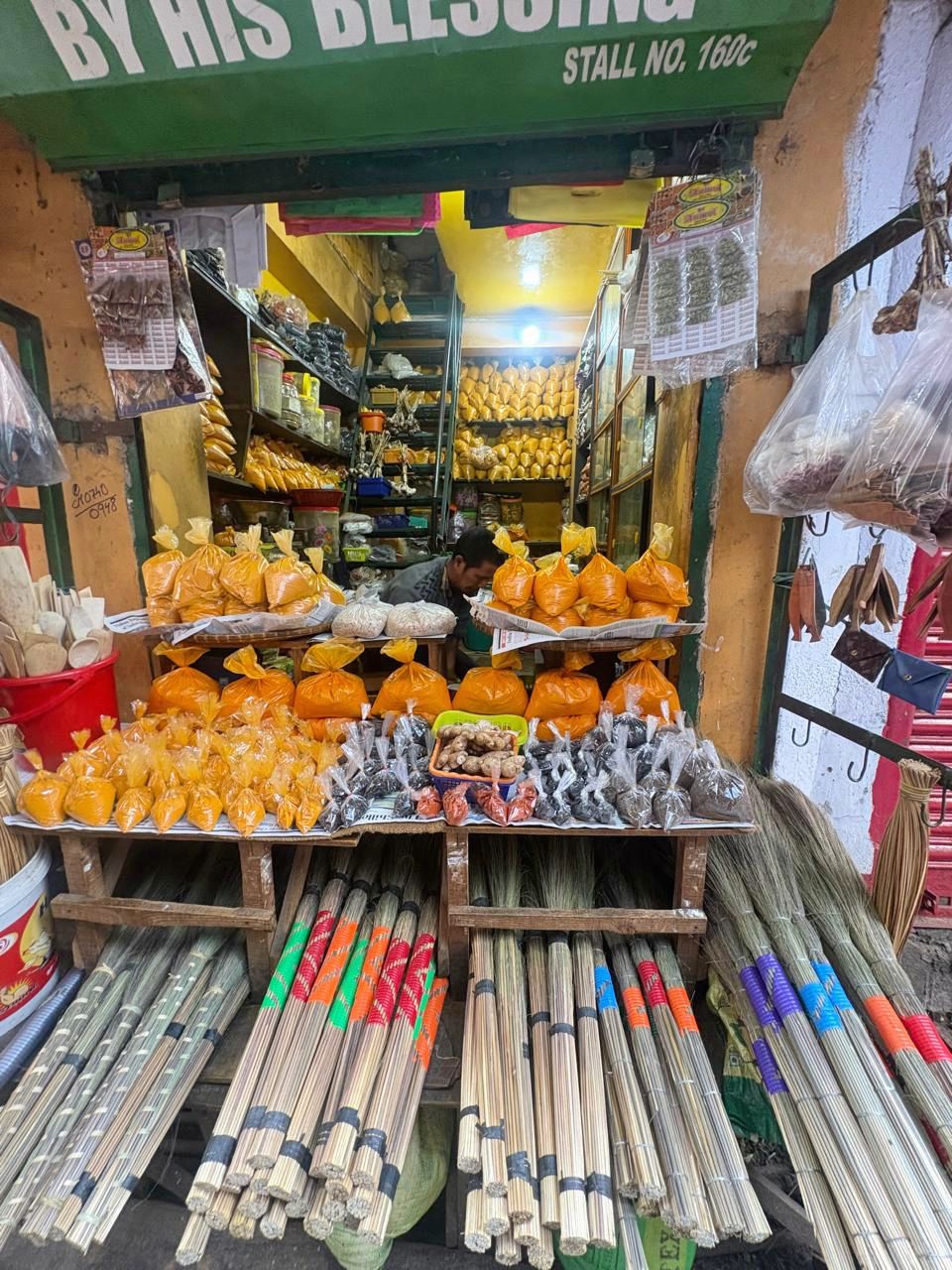
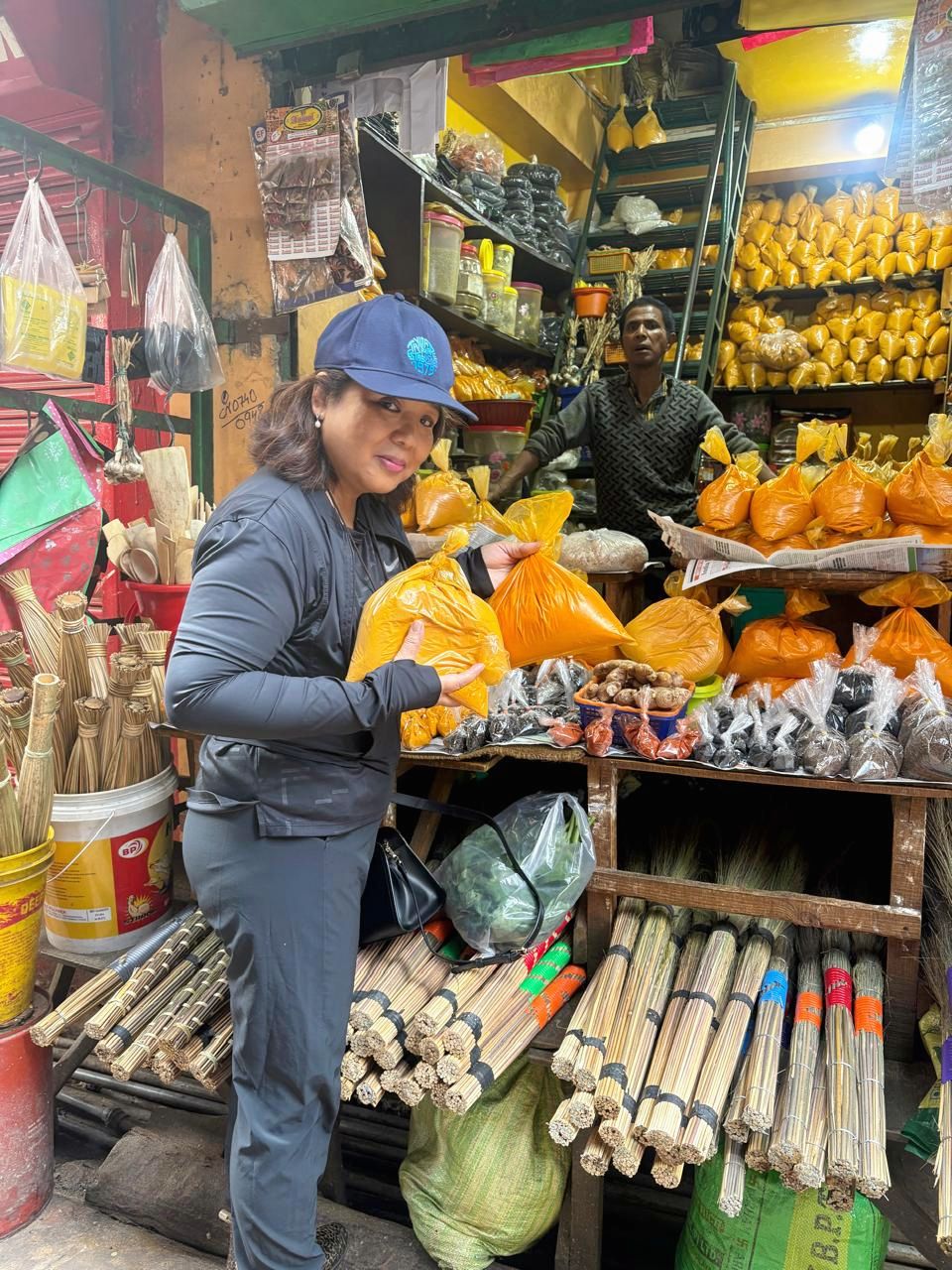
With the ginger and my little parcel of tungrymbai safely tucked away, I move further into the market, where another stall immediately catches my eye. It is impossible to miss a small shop glowing in shades of yellow and orange. Inside are rows of turmeric packets, neatly sealed and stacked, along with larger boxes holding the golden spice. The colour alone draws me in, and I find myself walking towards what will become one of my most memorable stops in the market.
Sixty-year-old Rang Kharsyntiew has spent more than three decades behind this counter, a business he inherited from his father. I instinctively address him as Bah, he Khasi way of respectfully greeting an older man. When I ask about Lakadong turmeric, he smiles knowingly, as though he has answered this question a thousand times before.
“Don’t judge it by its colour,” he says.
Like most people, I had always believed the brighter the turmeric, the better its quality. Bah Rang reaches for two packets and places them side by side. The ordinary variety is a striking yellow-orange, almost glowing. Beside it, the famed Lakadong looks surprisingly pale.
“This is how you tell them apart, not necessarily but its vibrancy,” he says.
Then, before I can ask another question, he tears open the packet.
A warm, peppery fragrance instantly fills the tiny shop. It is rich, earthy and unmistakably different. “The smell never lies,” he says, watching my reaction with satisfaction.
Lakadong turmeric, grown organically in the Jaintia Hills of Meghalaya, is prized not for its colour but for what lies within. Its curcumin content, the compound responsible for turmeric’s colour and many of its medicinal properties ranges from 7 to 12 per cent, compared to just 2 to 3 per cent in most commercial varieties. That exceptionally high concentration, coupled with its distinctive aroma, has earned it a reputation as one of India’s finest turmeric varieties and a sought-after natural remedy.
His modest shop is stacked floor to ceiling with packets of turmeric in every size. The shelves at the front display locally grown turmeric from Ri Bhoi and Jowai, but Lakadong isn’t immediately visible. Only when I specifically ask for it does Bah Rang bend beneath the counter and pull out another cache, almost as though he is sharing a well-kept secret reserved for those who know what to ask for.
I ask if he has the fresh rhizomes. Without a word, he disappears into the back of the shop and returns with a small tin box filled with knobbly turmeric roots. I buy every piece he has. “Crush and have one every morning with warm water and honey,” he advises. I promise him I will.
Small packets priced (ranging from 150 gm to 200 gm) at Rs100 and Rs 200 sit ready for travellers wanting to carry home a taste of Meghalaya. Beneath one of the shelves lie bundles of traditional brooms, almost forgotten in the sea of yellow. Yet everyone who passes seems to know this as the turmeric shop. Customers stop, greet Bah Rang, pick up a packet or two, exchange a few words and continue on their way, while I linger a little longer, breathing in the fragrance of freshly ground turmeric and realising that sometimes the most memorable souvenirs are not just fridge magnets or mugs.
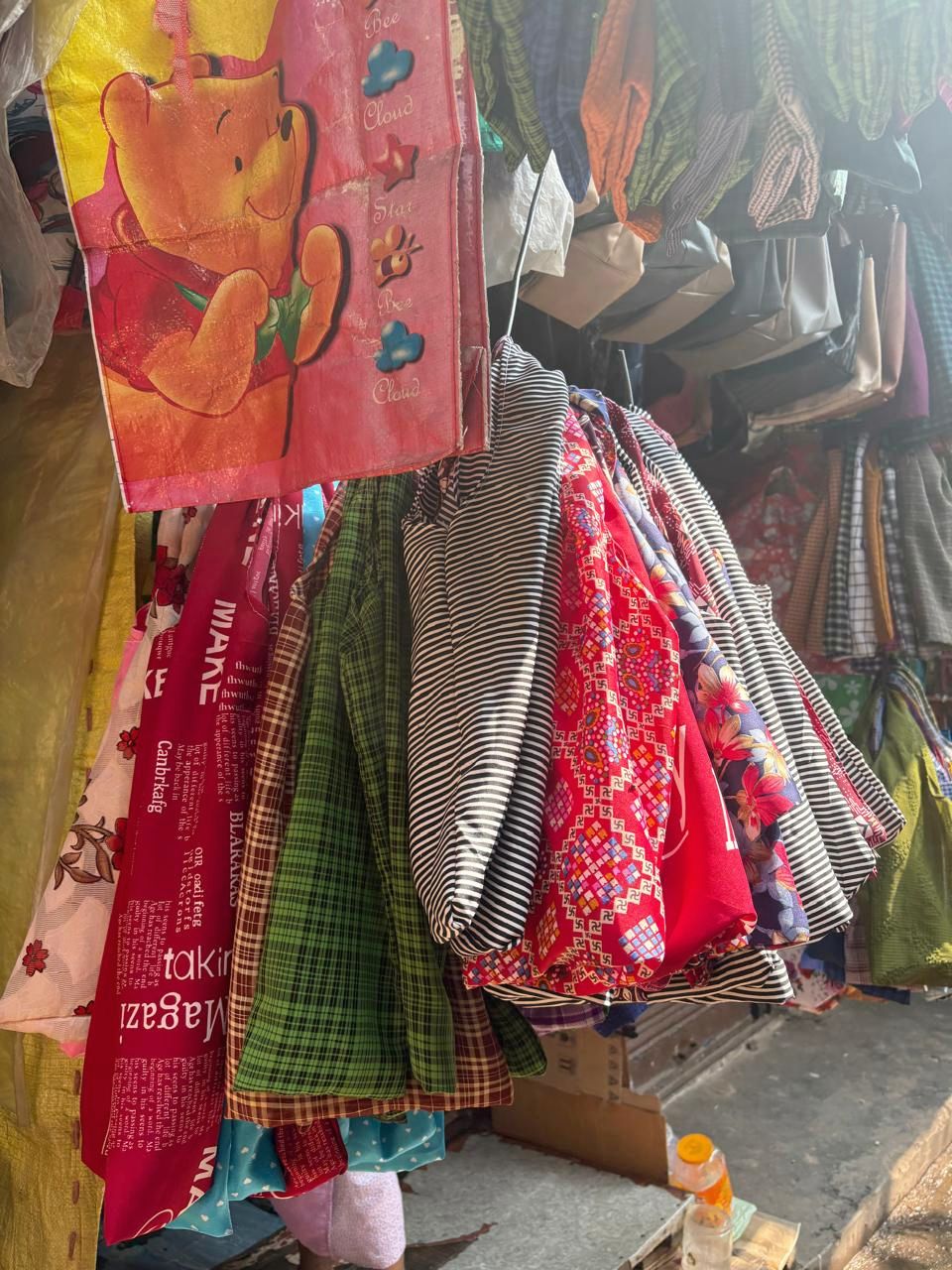
As I finally pull myself away from Bah Rang’s turmeric stall, I notice that even the things people carry home from Ïewduh tell a story. A vendor walks past with beautifully woven bags in intricate local patterns. I stop to look, and before long I have bought a few myself. They seem like the perfect companions for the precious packets of Lakadong turmeric now tucked safely inside my bag, a small piece of Meghalaya’s landscape and its traditions travelling home with me.
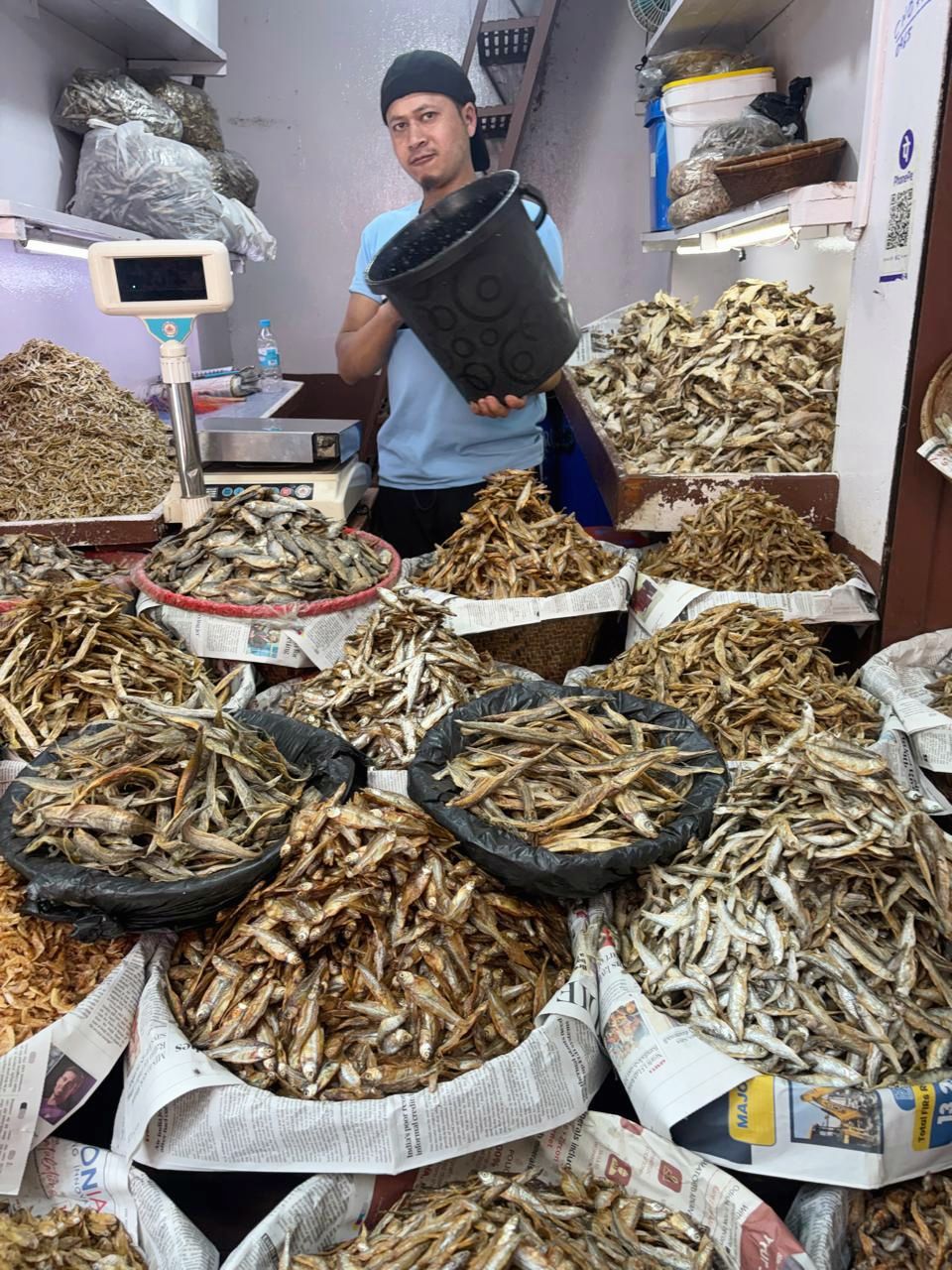
Moving deeper into the market, the aroma changes. The warm spice notes give way to the unmistakable scent of the fish section, where rows of baskets display an extraordinary variety from rivers, ponds and streams. Fish of every shape, size and texture sit side by side, each with its own place in the kitchens of the Northeast.
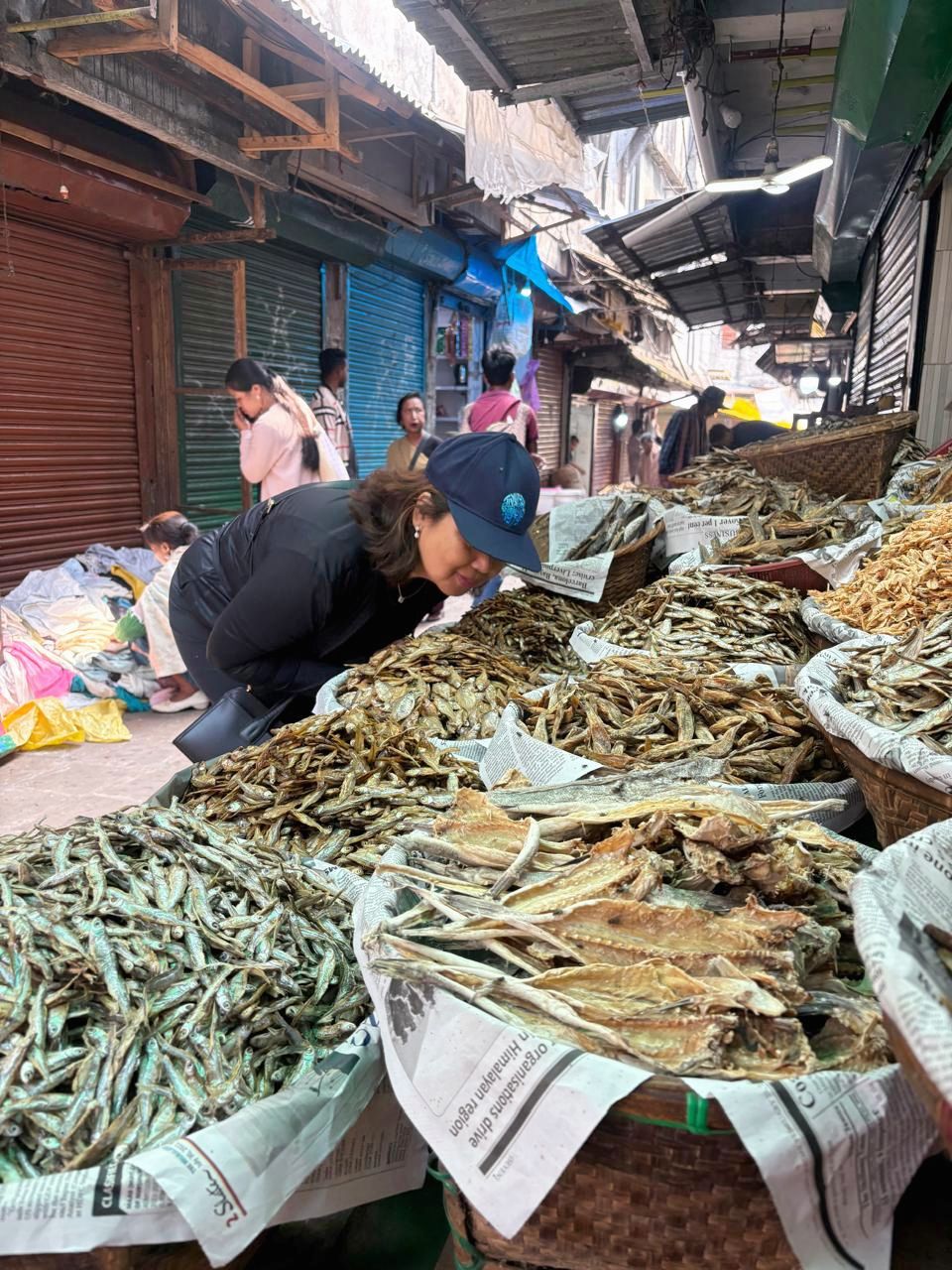
Among them are mounds of sun-dried fish, a familiar sight across many Northeastern homes. These are not just preserved ingredients but an essential part of everyday cooking stored for months and later transformed into fiery chutneys with chillies or added to curries, bringing a deep smoky flavour to the meal. Much of the fish comes from the waters of Umiam Lake (Barapani), the Brahmaputra and the clear streams of the Dawki River.
The dried seafood section catches my attention too. Tiny shrimps and larger prawns lie arranged in neat piles, dried under the sun before making their way into local kitchens. I lean closer, expecting a strong smell, but instead find a clean, briny aroma, the scent of careful preservation rather than anything overpowering.
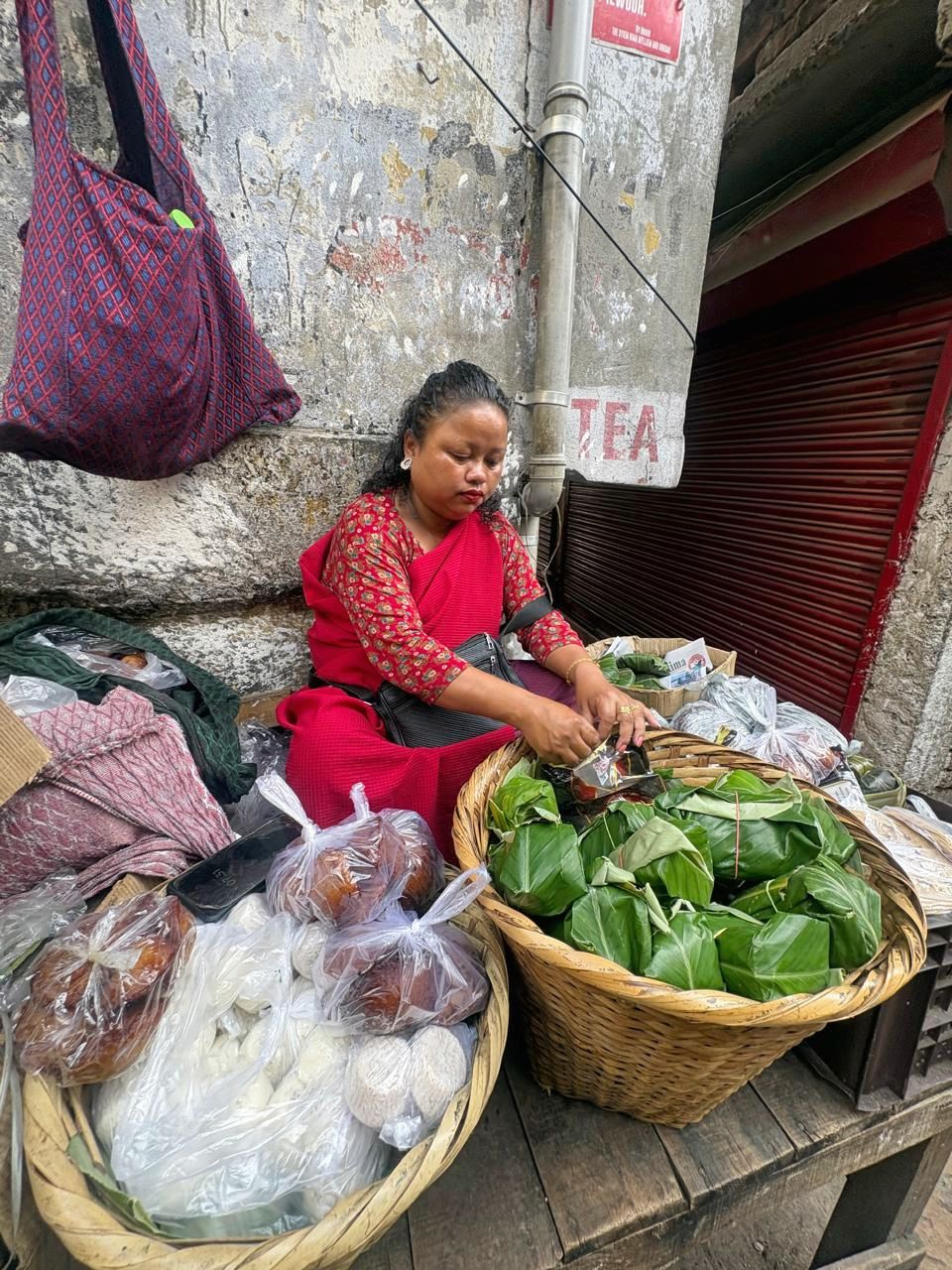
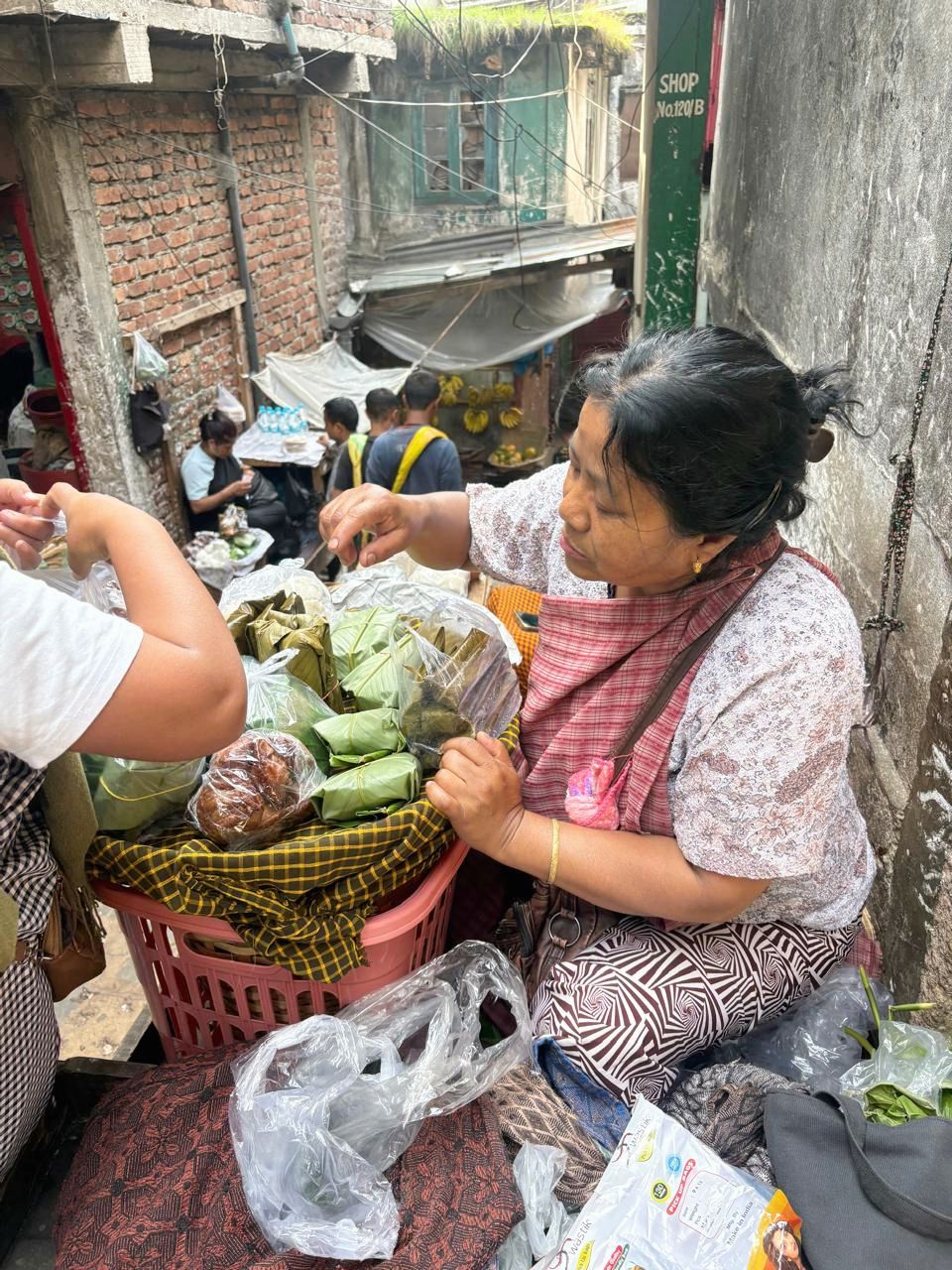
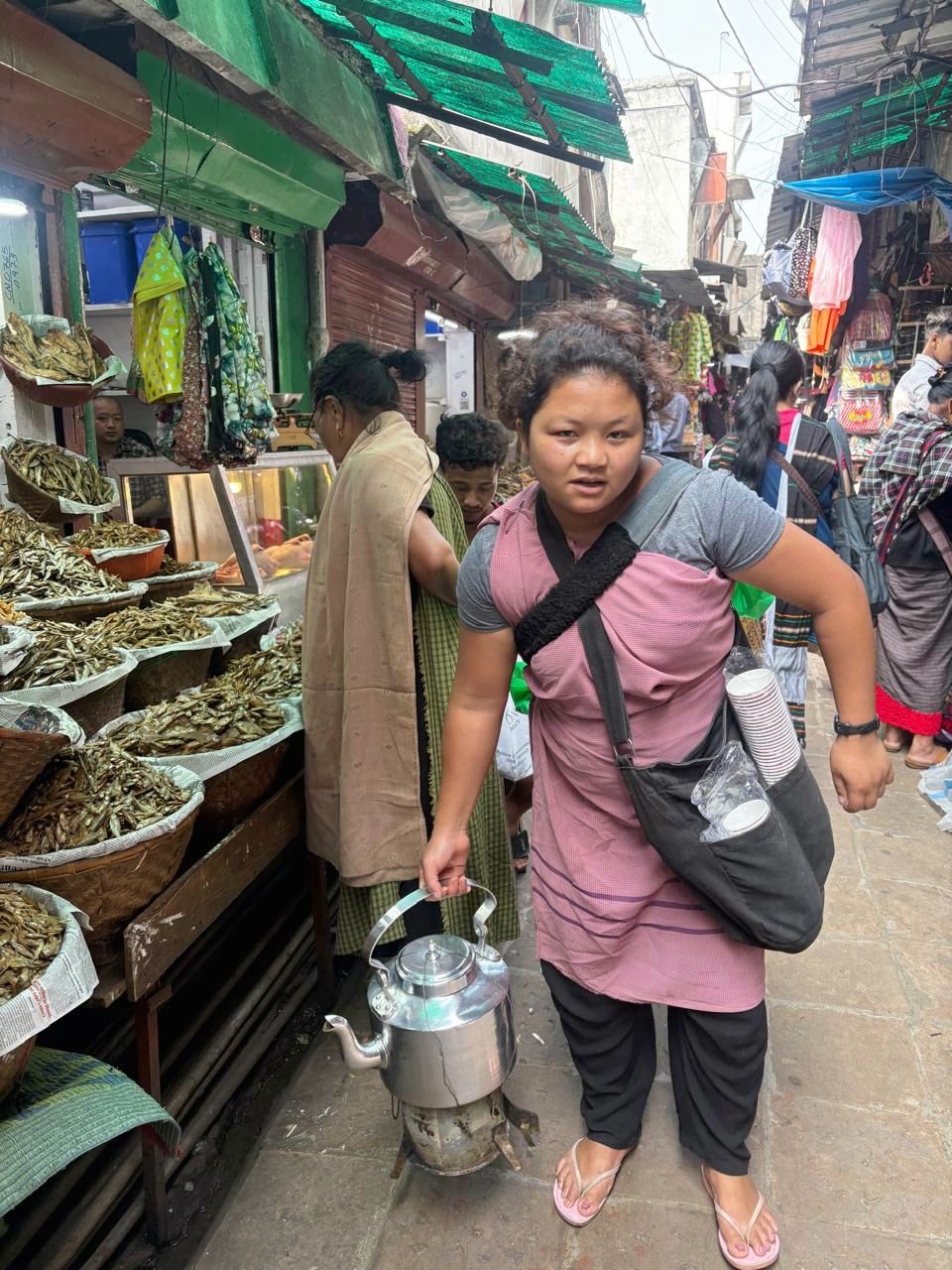
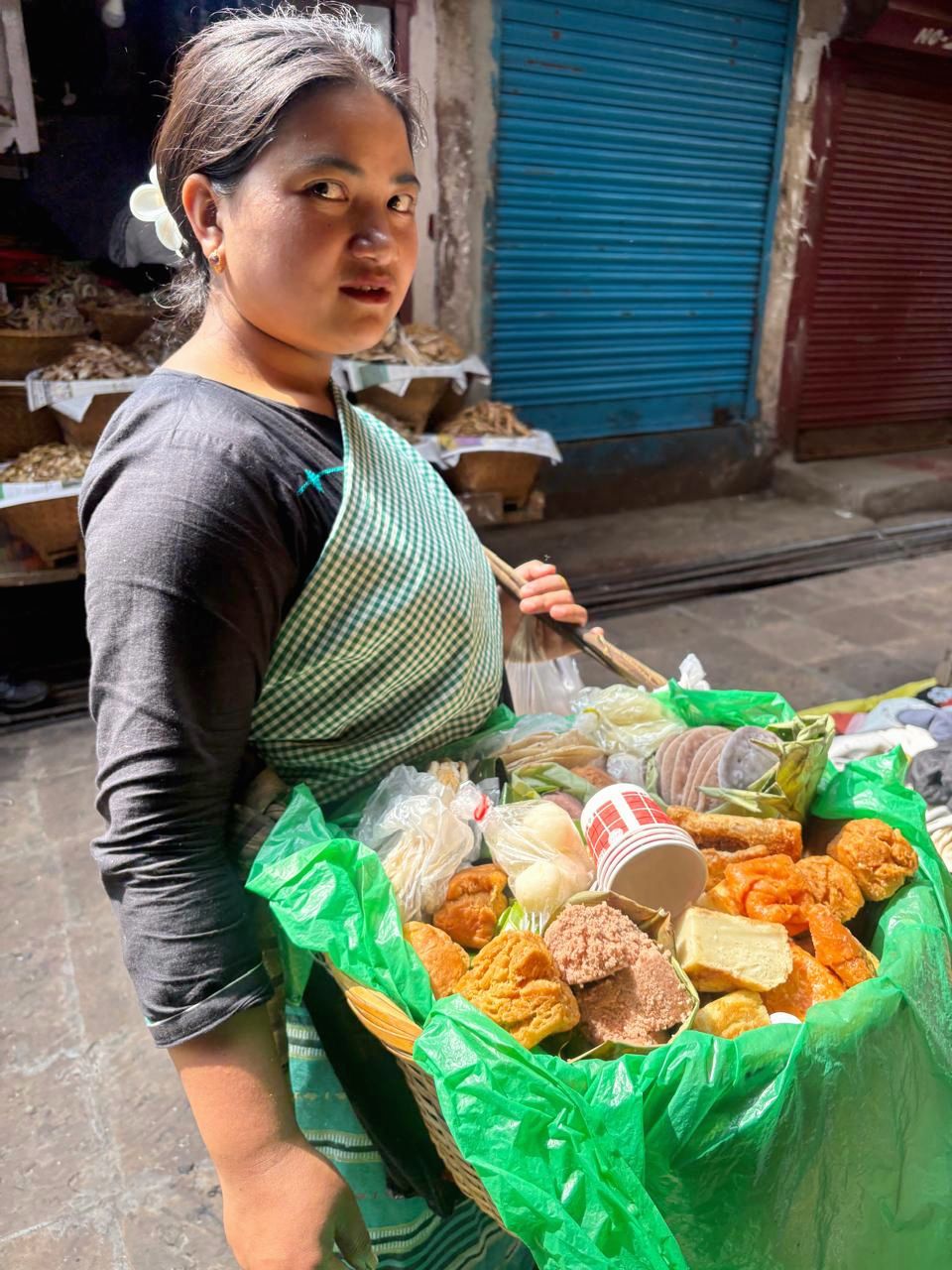
The market has its own rhythm of small comforts. Every now and then, weaving through the narrow lanes crowded with vendors and shoppers, comes someone carrying an aluminium kettle filled with steaming tea. Over one shoulder hangs a large bag of local snacks, including putharo—soft steamed rice cakes made from different varieties of rice, including white, brown and black.
For the shopkeepers who have been awake since the early hours, these simple offerings are an important part of the market’s daily routine. Many arrive before they have had breakfast, and a cup of hot red tea with a filling rice cake becomes a brief but welcome pause amid the rush of the day. In Ïewduh, even moments of rest carry the flavours of the hills.
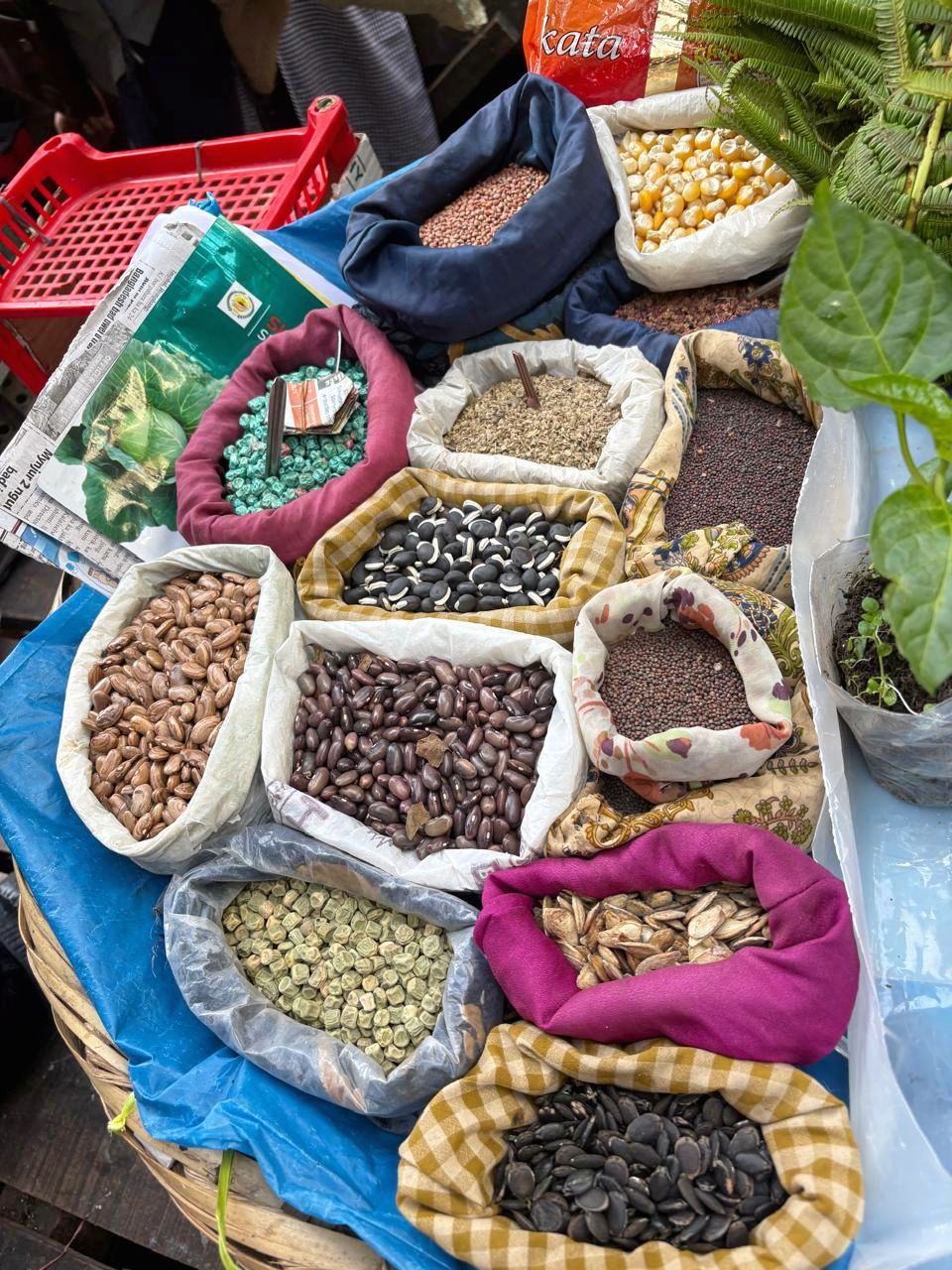
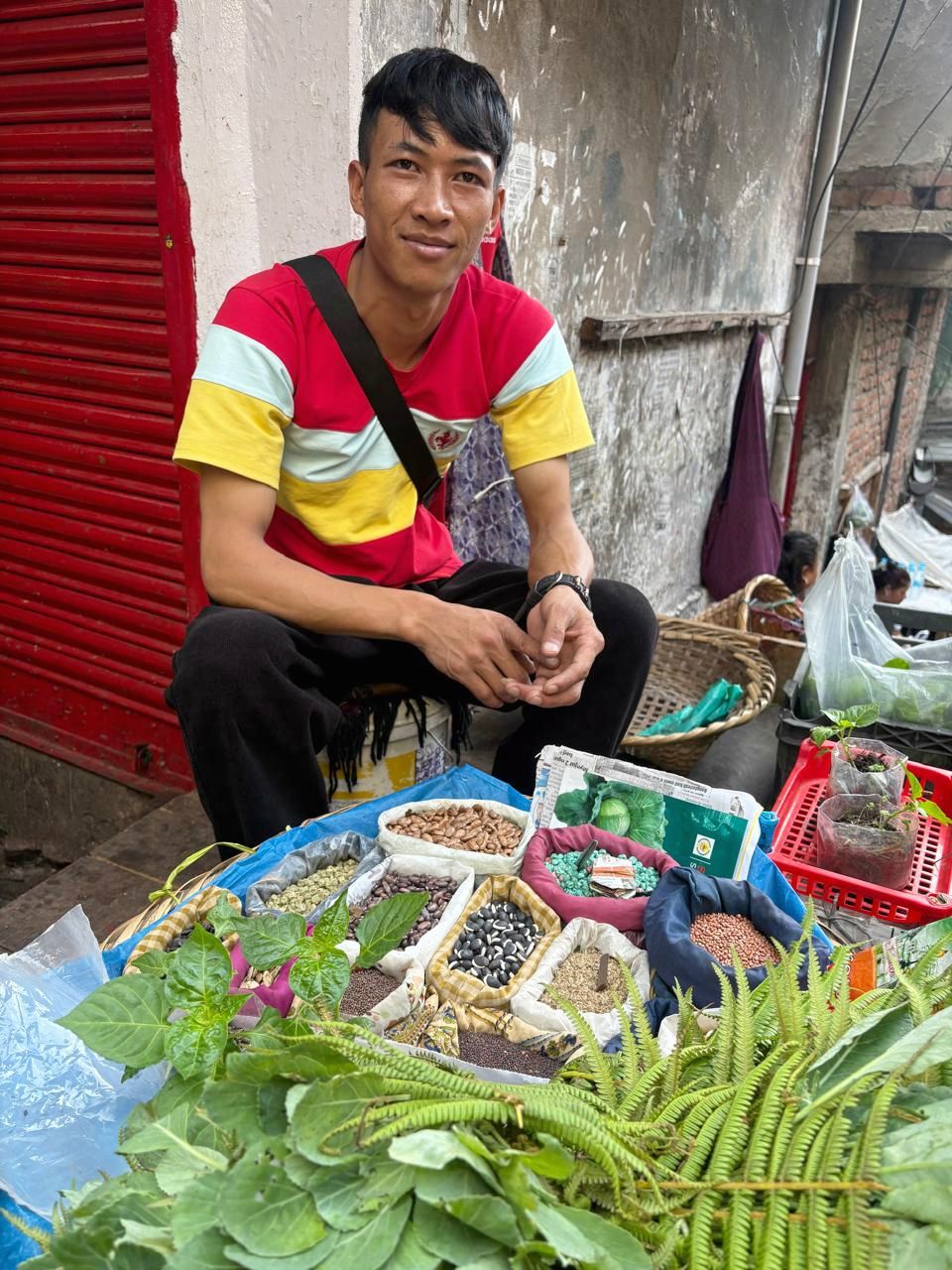
A little further ahead, another stall catches my eye for an entirely different reason. Alongside baskets of sumac, a small, wild, sour fruit from Northeast India (especially Manipur), the vendor also sells young saplings. It is a simple but beautiful idea, customers can take home not just the fruit, but the possibility of growing the same tree in their own backyard.
The pulses section offers another glimpse into the understated wisdom of local cooking. Lentils and beans are an important part of the Khasi diet, though they are prepared very differently from the heavily spiced dals familiar elsewhere in India. Rajma, for instance, is often simply boiled and seasoned with ginger, garlic and salt, allowing the natural flavour of the beans to remain at the centre. The food here is uncomplicated but deeply nourishing, built around respect for fresh ingredients rather than an excess of spices.
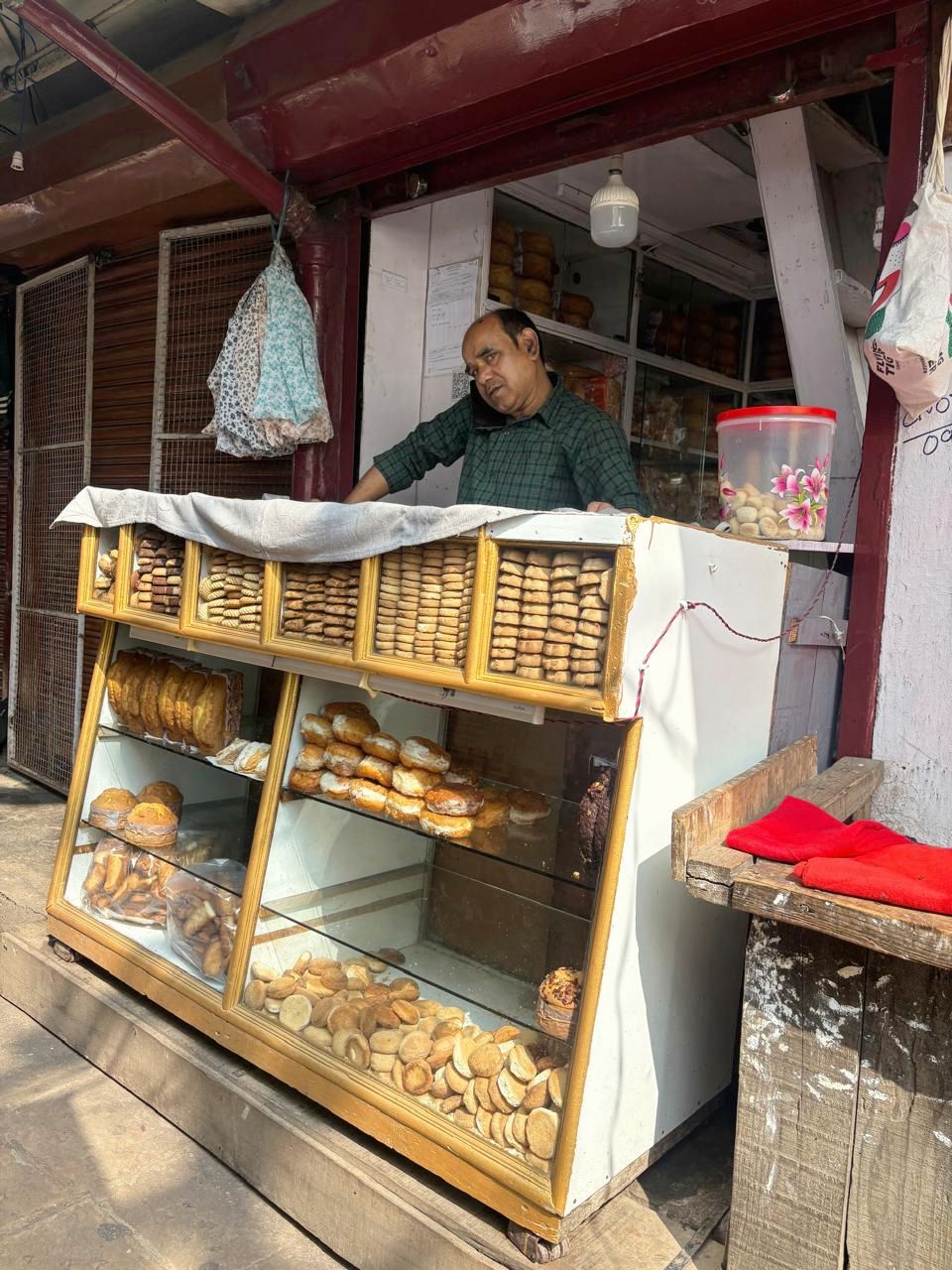
Then there are the institutions that have become part of the market’s identity. One such place is an iconic bakery that has stood here for decades. Its counters are filled with cookies, cakes and freshly baked treats, disappearing almost as quickly as they emerge from the oven. One taste is enough to understand why generations of Shillong residents continue to return.
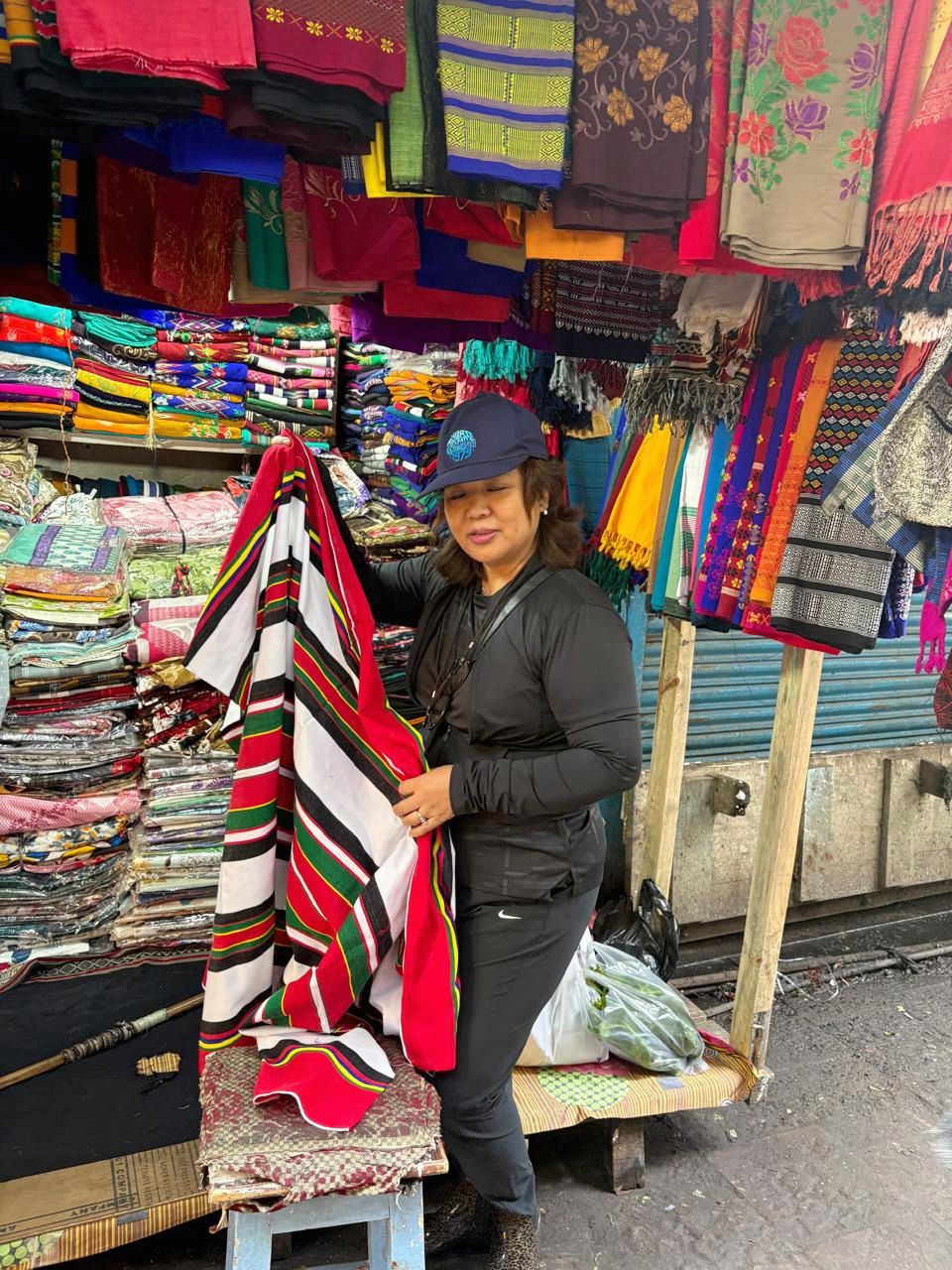
A few steps away, I find myself drawn into a textile shop overflowing with colour. Stacks of puan, the traditional wraparound worn across much of the Northeast, line the shelves. Though many are now machine-woven rather than handmade, the intricate patterns and vibrant designs remain intact. I try on a few, tempted by the colours, but eventually remind myself that my cupboard has already surrendered enough space to textiles.
The shop belongs to Imam Hussain, who has been running the store for more than a decade. What fascinates me is not only his collection but his connection with the place. Speaking fluent Khasi, he has built relationships within the local community, and his shop stands as an example of how Ïewduh embraces people and traditions from different backgrounds.
The vegetable section offers perhaps the strongest reminder of the richness of everyday food in the Northeast. The stalls look as though they have been brought straight from the fields banana stems and banana flowers sit beside cherry tomatoes, tree tomatoes and baskets overflowing with leafy greens of every shade. Spend even a few minutes in a market like this in Shillong, or anywhere across the Northeast, and one of the region’s most persistent food myths quickly disappears: the idea that people here eat only meat.
The reality is far more diverse. Seasonal greens, wild herbs, edible shoots and locally grown vegetables are central to everyday meals. The abundance on display tells that story more honestly than any assumption ever could.
One vendor, seated behind an enormous pile of roselle leaves, catches my attention. The deep green bundles almost spill over his stall. I ask him for a photograph, and he patiently poses for me. I leave without buying anything, but I carry away the image of a market where the changing seasons are reflected in baskets of greens, spices, fruits and flowers.
Walking through Ïewduh, it becomes clear that this is not just a market where people come to buy and sell. It is a place that holds Shillong’s everyday history.
Markets like this keep traditions and identity alive in simple ways. History here lives through the people who work here, the ingredients they sell and the stories they carry.
Another tea seller passes by with her aluminium kettle. I stop for a cup of red tea which is actually black tea – a pinch of tea leaf boiled with sugar and no milk. I carry its warmth with me as I walk away.