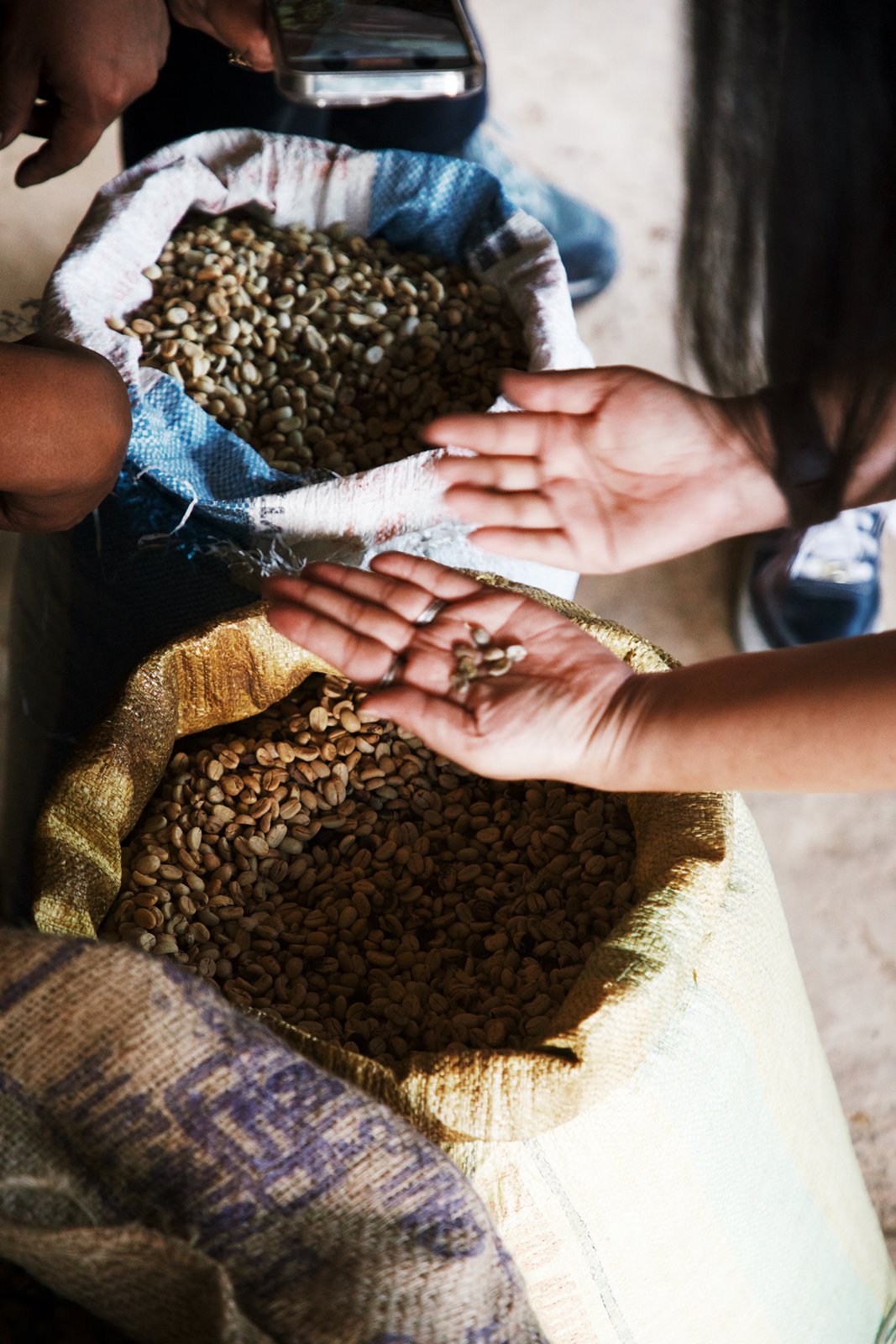
For a long time, coffee was not associated with India’s Northeast. The region was defined instead by the tea estates of Assam, and by a drinking culture shaped by what was already familiar: chai, cha, singpi, among others. Tea was made with milk, or simply with a dash of homegrown leaves—often called “black tea,” taken without sugar—along with local brews that rarely travelled beyond the hills. Or, in the case of state like Sikkim a huge producer of tea Coffee did not have a place in that landscape.
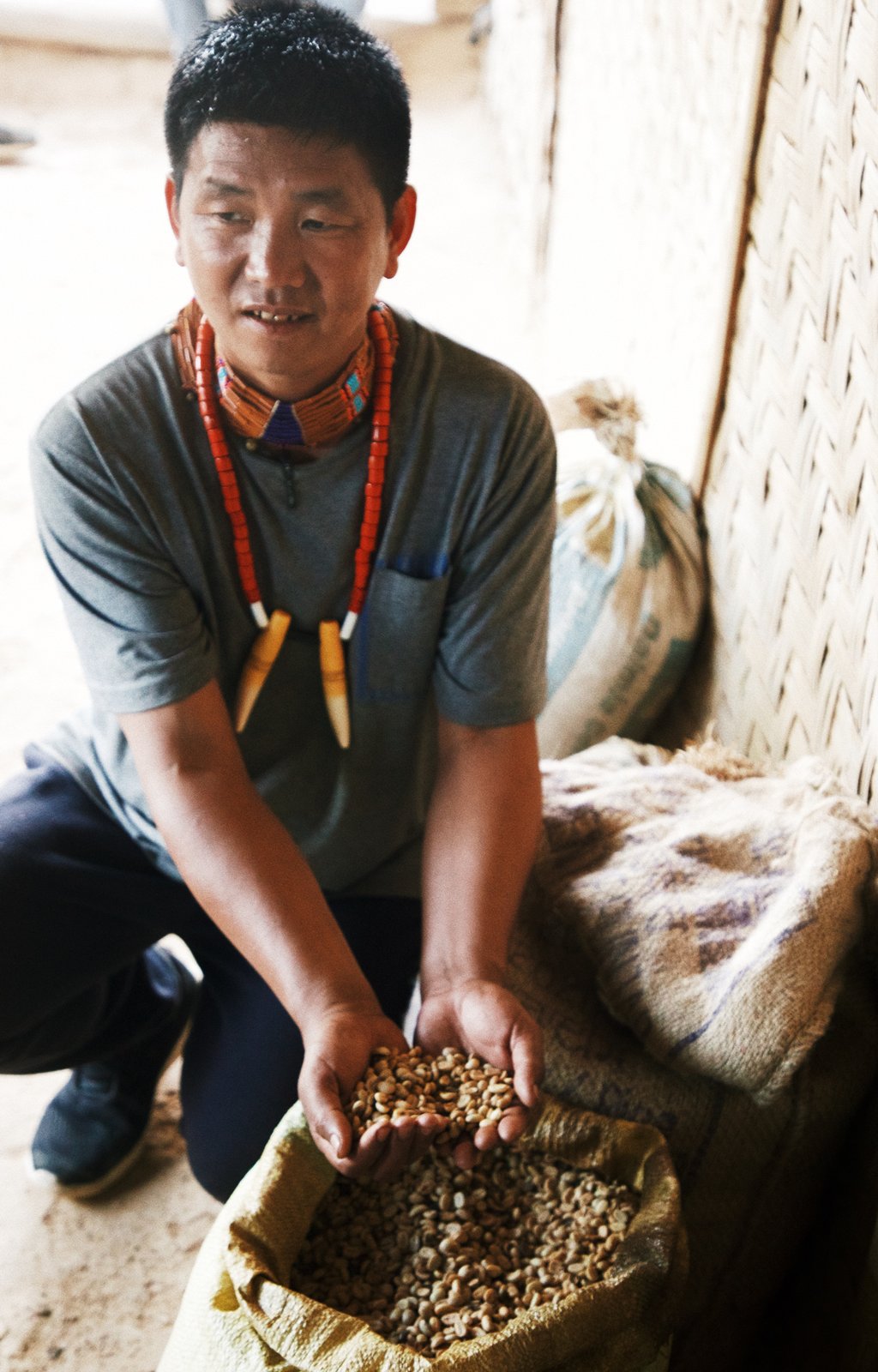
This absence was mirrored in the region’s agricultural patterns. Farming centred on subsistence crops, shifting cultivation, and tea—not commercial coffee. When coffee did arrive, it was not driven by demand but by a gradual realisation that the land could support it. The conditions—soil, shade, and altitude—were already in place. In that sense, coffee was less an introduction than a discovery.
Its arrival was tied to policy. Coffee was introduced as part of efforts to move away from jhum, or shifting cultivation, towards more settled farming. According to indiancoffeeculture.com, it was first planted in 1953 in Cachar, Assam. From there, it spread to the Garo Hills of Meghalaya by the 1970s, where it was promoted as an alternative livelihood, though it has since given way to crops like ginger, black pepper, and tea. By the 1980s, cultivation had extended into Nagaland and Manipur, with surveys identifying over 40,000 hectares across nearly 300 villages as suitable for coffee.
But expansion did not translate into stability. The systems needed to sustain coffee—processing, market access, timely payments, did not keep pace. Farmers produced, but much of the crop moved through centralised channels, involving long distances and limited control over pricing. Over time, many plantations were abandoned—not because the land failed, but because the support structures did.

It is in Nagaland that this story is beginning to shift. Data presented at the Coffee Canvas: A Journey from Farm to Global Market event in Kohima suggests that around 11,187 hectares—just over 1% of the state’s potential coffee area—have been developed. At the same time, the region’s coffee is drawing attention for its distinct flavour, shaped by microclimates and elevation.
The shift is visible not only in acreage but in approach. A small group of entrepreneurs is working to rebuild the value chain from the ground up. Among them is Grace Muivah, whose venture, Ngarum, has brought Northeast coffee into urban markets like Gurugram.
“This journey began about four years ago,” Muivah says. “I was working on a project and started thinking more deeply about coffee. I had always been drawn to it, and that’s when Ngarum began to take shape.”
With a background in hospitality, she was drawn to a farm-to-cup model—direct, transparent, and built around relationships with growers. Over time, that idea evolved into practice. She began sourcing directly, working with farmers across Manipur and Nagaland, and building a network that now includes around 35 growers.
Earlier, farmers relied on distant boards to sell their produce, navigating a slow and complex logistics chain. Muivah’s model attempts to shorten that distance. She visits villages, coordinates procurement, and ensures payments are made promptly, often providing small advances at the start of the season.


Coffee in Nagaland grows under conditions that differ sharply from established regions like Coorg or Chikmagalur. There, cultivation is structured, shade is managed, and processing is standardised, producing predictable, chocolatey, nutty cups.
In Nagaland, coffee is planted in small plots within existing forest cover. There are no uniform rows or engineered shade systems; plants grow alongside native trees under a largely intact canopy. Ripening is slower, chemical inputs are minimal, and the soil plays a defining role in flavour.
The result is a lighter, more delicate cup—marked by mild citrus notes and restrained sweetness. It does not carry the heaviness of plantation-grown coffee, leaning instead toward clarity and balance.
This approach also allows coffee to coexist with forested land. Unlike shifting cultivation, it does not require repeated clearing. In districts like Mon, where coffee is still new, this is beginning to influence land-use patterns.
At Ngarum, quality is shaped as much by process as by origin. Seeds are selected based on altitude, soil, and microclimate—decisions that directly influence flavour.
Harvesting is selective and repeated. Pickers return every few days, collecting only ripe cherries. This prevents uneven fruit from entering the batch.
Post-harvest handling remains critical. Cherries must be pulped, fermented, or dried quickly to avoid spoilage. Where infrastructure has historically been inconsistent, small interventions—better drying surfaces, closer monitoring, tighter timelines—are beginning to improve outcomes.
The difference is evident: cleaner cups, fewer defects, and more consistency across batches.
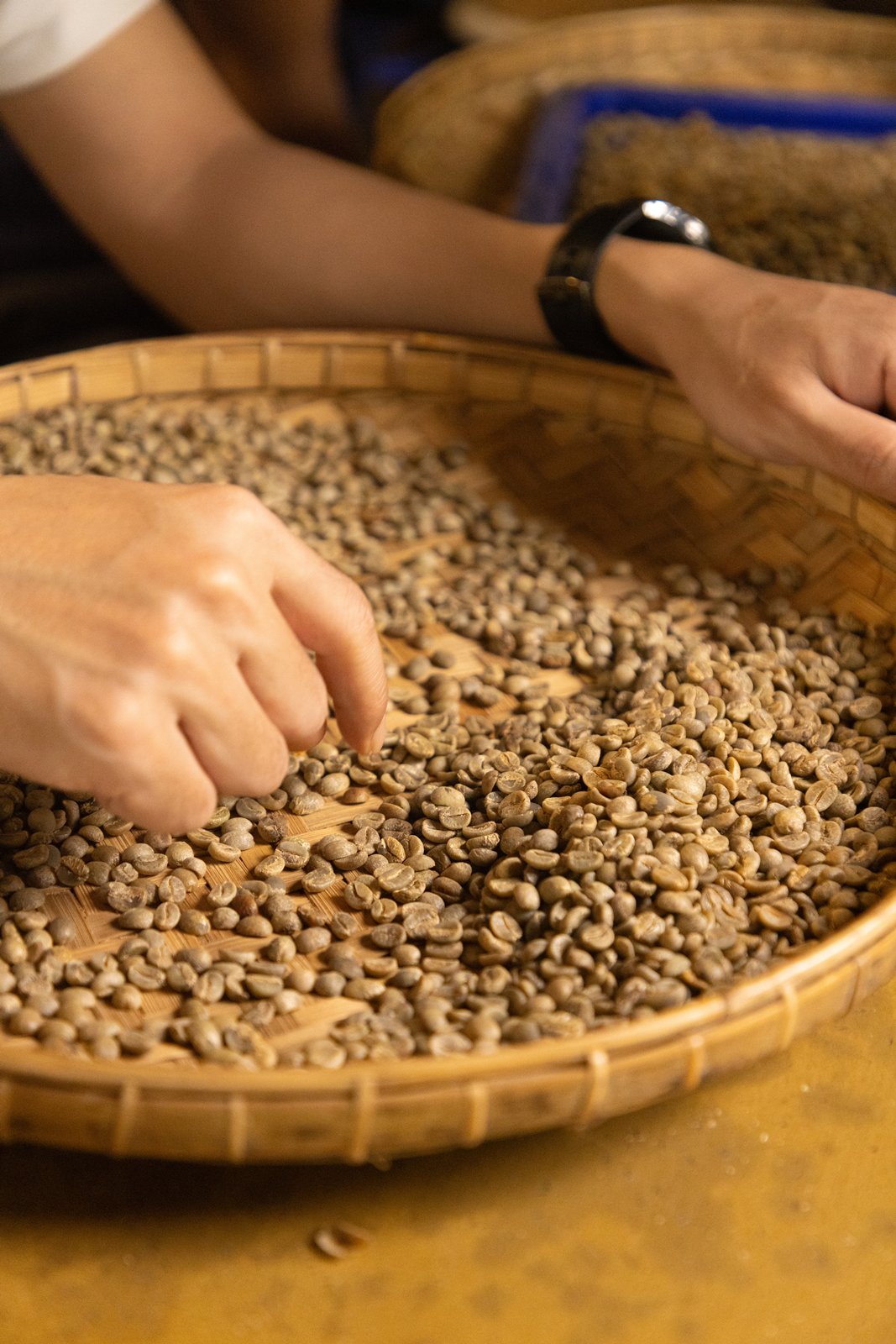
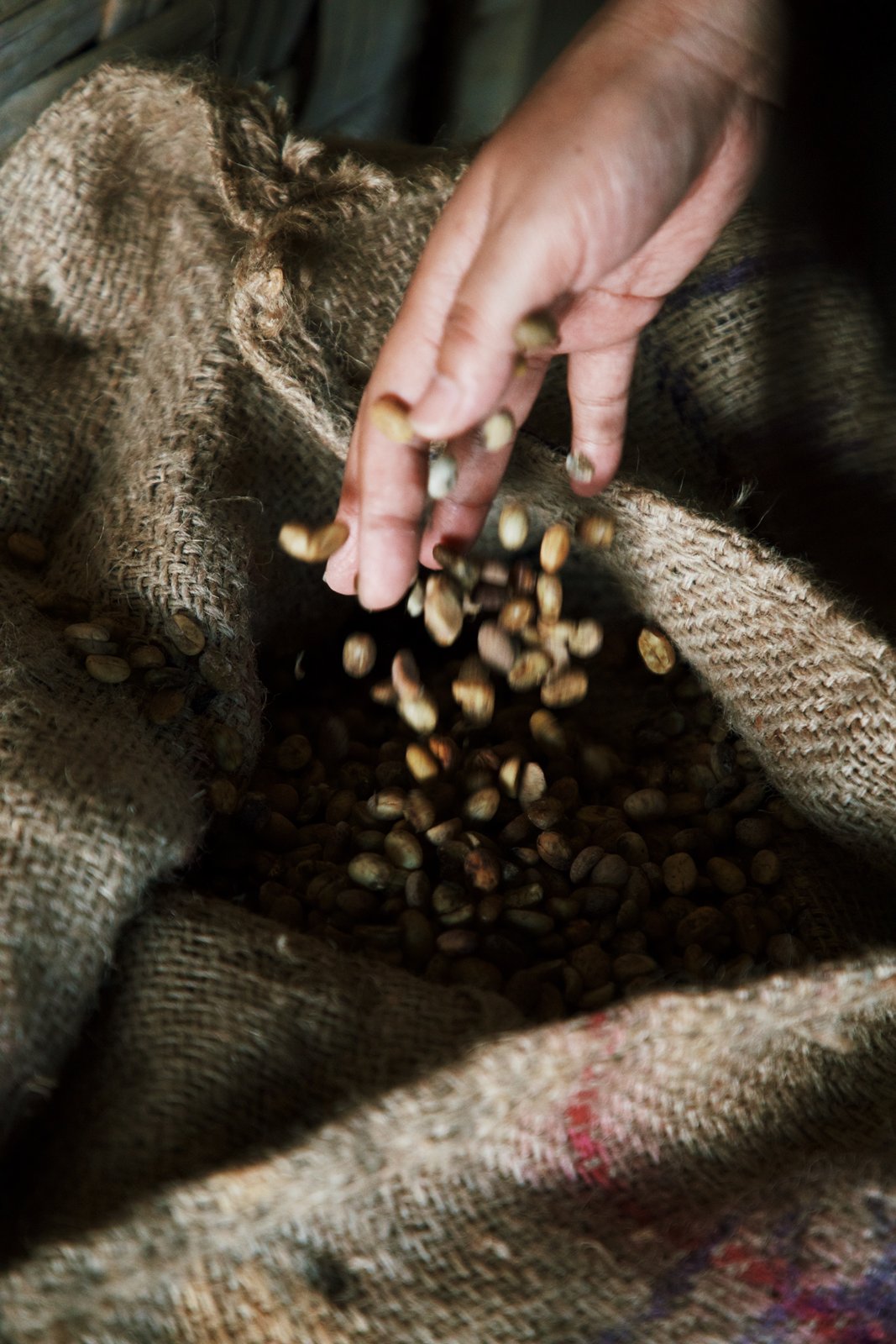
Muivah’s background in hospitality, including work with Aman and SET’Z, informs her approach—precision, attention to detail, and an emphasis on experience. Four years ago, the work became personal. “When it started feeling personal,” she says. “I’m a Naga, from Northeast India, and this isn’t separate from me. Ngarum isn’t just a brand—it’s something I am building from where I come from.”
Nagaland’s coffee sector existed, but unevenly. Farmers produced, but sales moved through distant boards; payments were delayed, and connections to buyers were weak. Muivah chose to work differently.
Today, she collaborates with around 35 farmers across Nagaland and Assam, nearly half of them women. She travels to villages, coordinates procurement, and manages logistics. Payments are made directly, often on the spot, with small advances provided at the start of the season.
In Mon district—the northernmost part of Nagaland—this consistency is beginning to influence how farmers approach the crop.
“Earlier, it wasn’t their main focus,” she says. “Now they’re investing their time. The work feels worth it.” The brand remains closely tied to identity. “Even the name Ngarum is a Tangkhul Naga word. It means ‘coming together’—people, land, stories.”

Northeast coffee does not fit neatly into conventional expectations. Its profile is lighter, more layered, and slower to reveal itself—a subtlety that can be overlooked in a market accustomed to stronger, more immediate flavours.
Logistics remain a challenge. Coffee from remote villages often travels through multiple points before reaching markets, with delays that can affect quality. Infrastructure is uneven, and transport unpredictable.
Yet the beans themselves remain distinct. Ngarum works exclusively with 100% Arabica, roasting lightly to preserve the coffee’s natural character. There is pressure to adapt to more familiar profiles, but the approach remains consistent.
The terrain—scattered farms within forest cover—means each batch carries variation. It is harder to standardise, but that variation is also part of its identity.
Nagaland’s coffee is still evolving. Unlike regions such as Coorg or Chikmagalur, where systems are firmly in place, cultivation here remains small-scale and integrated with the forest. The result is a cup that is lighter and more expressive—citrus notes, gentle sweetness, occasional florals. Uniformity is not the aim; clarity is. Where established coffee regions are built on predictability, Nagaland’s coffee is still finding its voice, shaped by the land, the people, and a system that is only now beginning to take form. And that evolution, according to Muivah, is “really the character and the USP.”