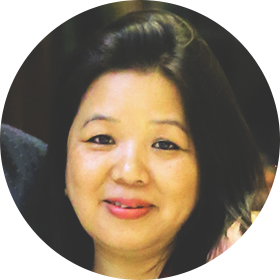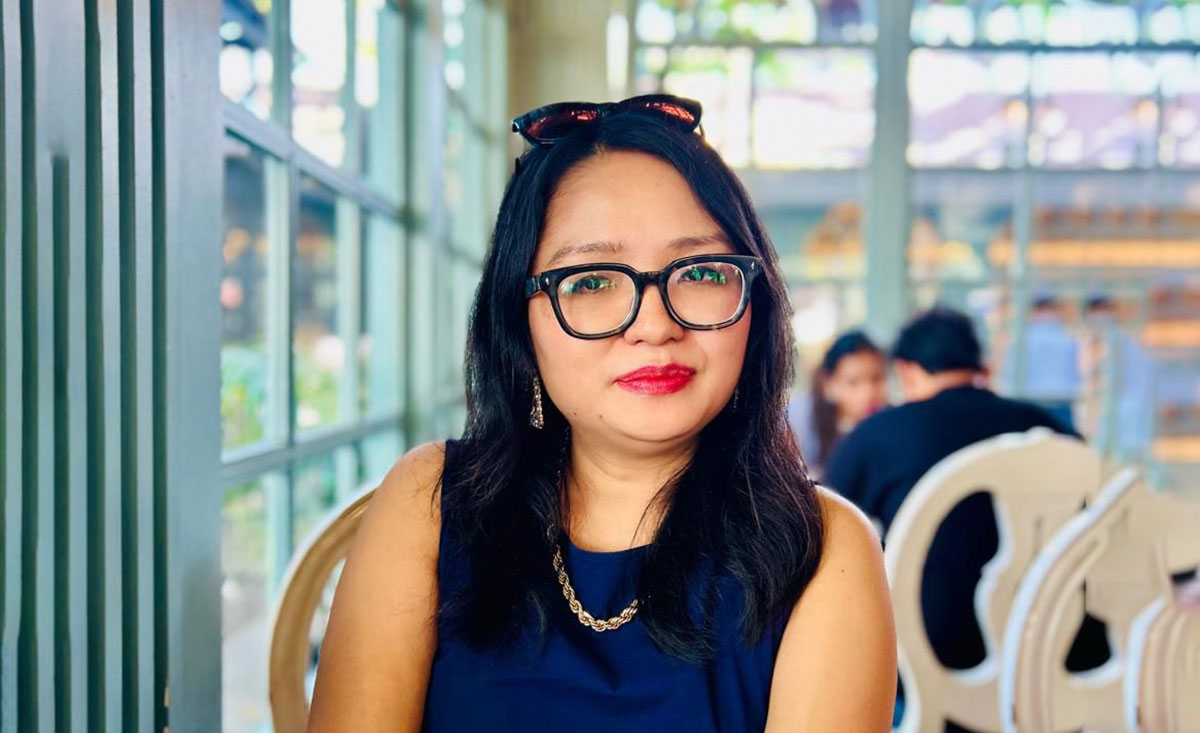
Some stories stay with us because someone took the time to tell them. For Nzanmongi Jasmine Patton, that “someone” was often her father, a gifted storyteller who could hold an evening still with a single tale. Sitting with her siblings in Dimapur, a town then now a smart city in Nagaland quite far from their ancestral village of Lakhuti, a hillside hamlet in Wokha district of Nagaland, Jasmine grew up listening to stories that were not written down but lived in voice, memory, and place. These were not merely bedtime stories, they were the lens through which her people, the Lotha, one of Nagaland’s 16 major tribes (with a population of approximately 166,343 as per the 2011 Census), understood the world: through myth, metaphor, and generations of lived wisdom.
Now an Associate Professor and Teacher-in-Charge at the Department of English, Gargi College, University of Delhi, Jasmine has spent the better part of her academic and personal life trying to ensure those stories do not disappear.
It was during one visit to Lakhuti that the urgency of this work hit her. She was visiting sacred sites — places that had long featured in the folk tales her father told — and felt the awe of seeing them with her own eyes. But later, when she sat with her cousins who still lived in the village and asked them to share the stories they knew, she was met with silence. They did not know any. Not one.
That moment shifted something for her. If even those closest to the land no longer carried the stories, what would be left in a generation or two? And if the stories faded, what else would go with them ways of seeing the world, values, memories, the small but powerful truths passed from one generation to the next?
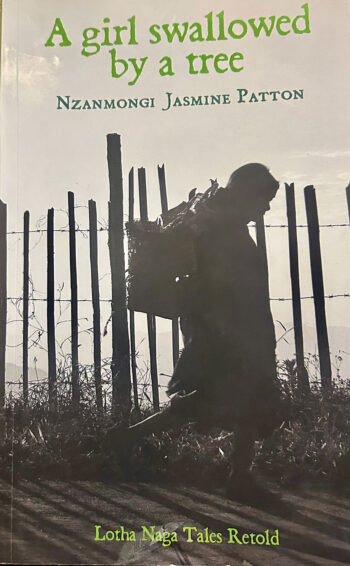
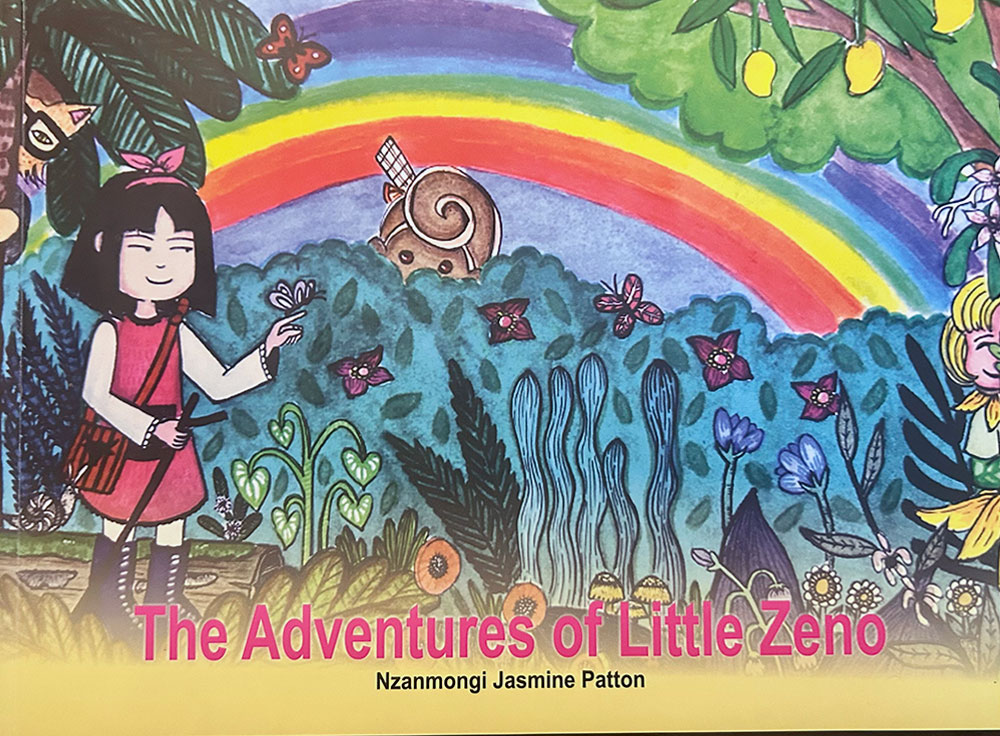
Jasmine began to collect, translate, and write, driven by a deep desire to engage with the stories and traditions of her community. Her book A Girl Swallowed by a Tree (2017) emerged directly from that impulse, capturing oral narratives in written form. Another work, The Adventures of Little Zeno (2021), is an illustrated novelette about a young Naga girl growing up in Nagaland. “I wrote this especially for my children,” Jasmine explains, “so that even if they grow up far away in Delhi, removed from their roots, they can still imagine a glimpse of life in Nagaland.”
Her intent was never simply to preserve the past out of nostalgia, but to allow cultural knowledge to travel, evolve, and be embraced by a younger generation that is increasingly distant from its heritage.
She also sees the limitations of textbook-style preservation. What stories need, she believes, is space in the imagination. For her, language survives not in archives but in use in stories, songs, children’s books, and everyday speech. That is why she supports efforts that go beyond documentation, like Lotha Language Day and the launch of a Lotha-English dictionary app, both recent initiatives by the Lotha Academy.
Jasmine does not see herself as the voice of her community. Rather, she sees her role as one of listening carefully, translating responsibly, and passing on what might otherwise be forgotten. In the classroom, she brings this same ethos encouraging students to see literature not just as what is printed in major anthologies but as something that can come from their own homes, their own languages, their own elders.
In a time when many Indigenous languages and oral traditions across India are vanishing, Jasmine’s work is quiet but urgent. It reminds us that identity is not something handed down — it is something remembered, retold, and often, rewritten.
The NE Stories in conversation with Jasmine to explore and understand the power of storytelling in preserving identity, language, and belonging in Nagaland.
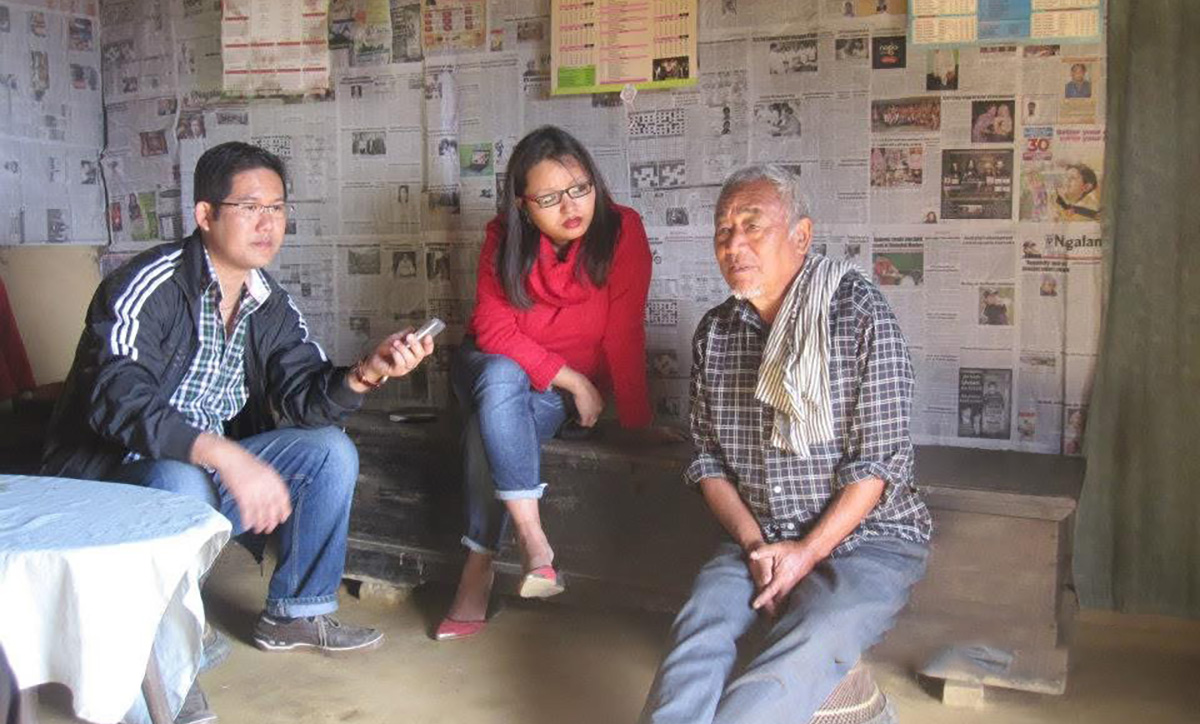
A: This feels like the right question to begin with, because it answers the one question that quietly sits behind all my writing—why do I do what I do? The answer, for me, has always been rooted in preserving cultural heritage, reclaiming collective identity, and carrying forward the stories once passed from mouth to ear—by that, I mean oral narratives. But coming back to your question about the moments that made me truly notice the generational disconnect—hear me out.
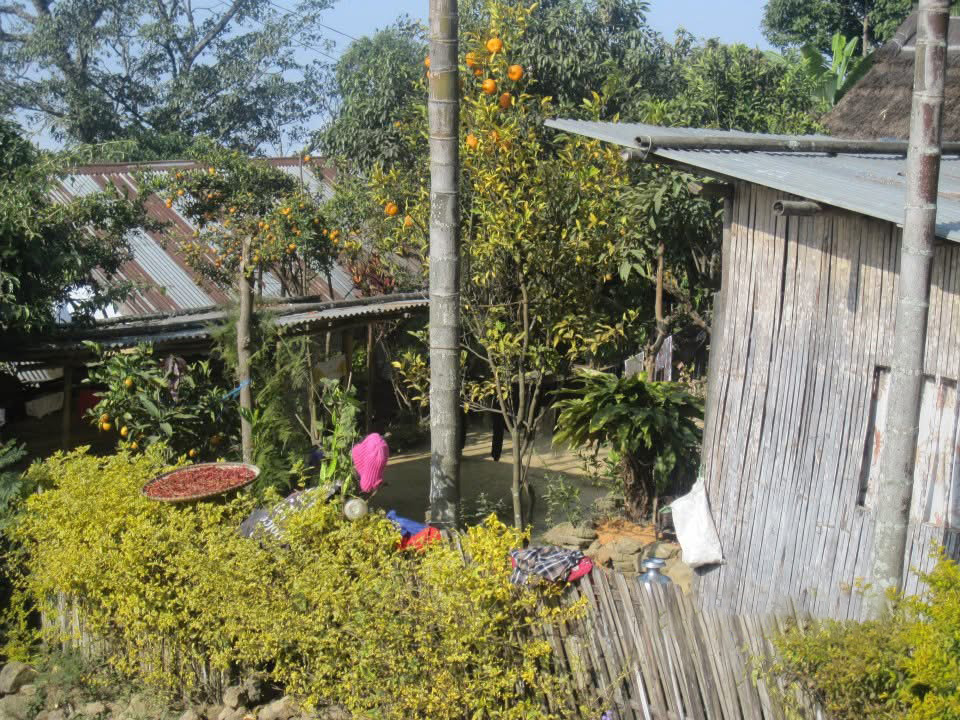
For as long as I can remember, trips to our native village Lakhüti in Nagaland were rare, but always a delightful treat. It meant waking up to misty mornings, that sweet nip in the air, and the clatter of cousins rushing to greet you. Since the only way to get water back then was from natural streams and ponds, one of our first tasks each morning was to accompany an adult family member to fetch it. While this was not a favourite chore for my village cousins, I loved it. We would grab our jerkins (old jerry oil cans that were upcycled as water carriers) or the small pharii (a bamboo basket bearing a small aluminium pot), and race down the muddy, crooked paths that rose and fell without reason. The cracks in the road, the broken concrete, the mud—none of that mattered. What mattered was the thrill of running together toward the wozhu, the natural pond, where the mornings always felt alive.
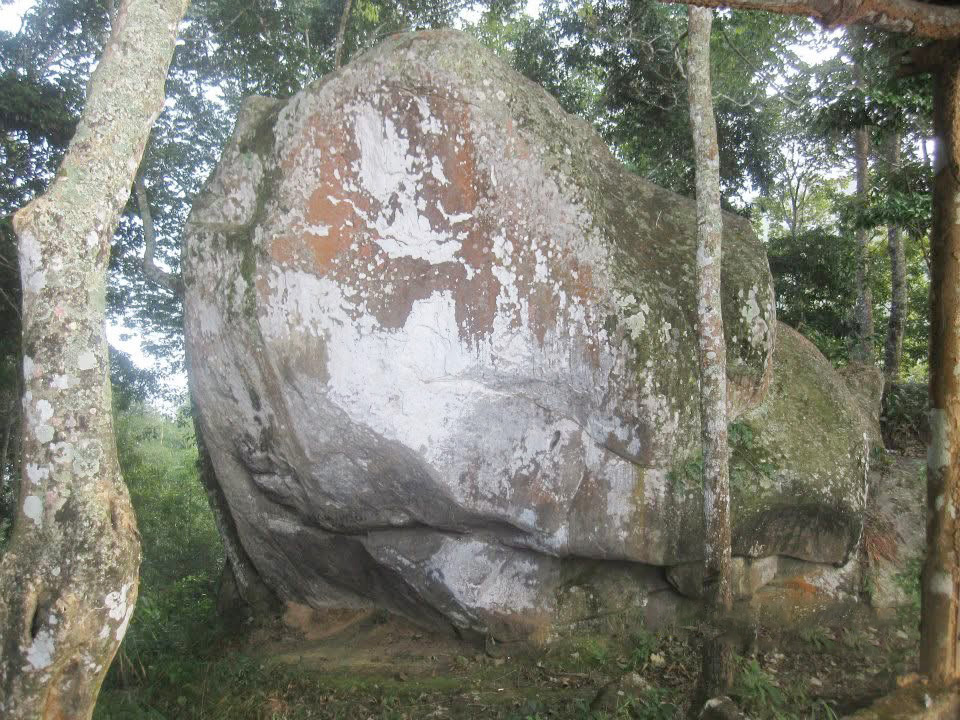
One particular year, my dad took me—then the eldest of all the siblings—to visit sites from the folktales he used to tell us as kids. One was Tiyilong (the big boulder) and another was Menkitong (the tree where enemy heads were once hung). Both feature in my book A Girl Swallowed by a Tree. I still remember the glee with which I connected the stories to the places. It was like my father’s stories had suddenly come alive!
Later that same day, I remember sitting with some of my paternal cousins, egging them to tell me some folktales. To my shock, they knew none. Not a single story. I remember feeling a rush of disappointment. If even those who lived in the village no longer carried the tales, then who would? Who would remember the beauty of our stories? Who would pass them on?
That experience disturbed me deeply. It set me on a sacred pilgrimage to unearth, inscribe, and cherish our cultural roots.
Another moment came at a get-together with Lotha-Naga friends in Delhi. On a whim, I shared a folktale, one that was once told in every village, around every hearth. A simple story, but one that carried our values, our vivacious humour, our pain. I looked around the room: bright, articulate Lotha-Naga students in their twenties, and realised not a single person knew the story. They had never heard it before. How was that even possible?
Those two moments struck me with profound force. They weren’t just about forgotten stories. They marked the loss of a cultural heartbeat. These were stories that once helped our ancestors make sense of the world: why we distrust the moon and the jerhan (squirrel), why cruelty and jealousy don’t pay, why kindness triumphs over strength. And yet, in just one generation, these stories had vanished from the granary of our memory and daily lives.
Those moments changed me. They made me realize that my work couldn’t wait. These stories are not relics—they are emotional blueprints, philosophical anchors, and historical testimony. Translating and preserving them is my way of listening back—of catching those ancestral voices before the fickle wind of time carries them away for good.
A: Our languages are fragile—many passed down only through memory, not text. And memory, as we know, fades fast when it is not nurtured. Across Nagaland, I have seen elders and church leaders trying—translating the Bible, compiling hymn books, even creating primers for schoolchildren. State board schools are now attempting to reintroduce mother-tongue education, especially in the early years.
But where I see the biggest gap is in creative literature, especially for young readers. We need stories, not just schoolbooks. Language survives when it lives in the imagination. Publishing makes that possible. A child who sees their first language in a storybook, who laughs at a folktale or hears an aphorism in their own dialect (even with a translated glossary), will carry that language in their heart. Publishing gives language a second life.
In the past three decades, more Naga intellectuals have sensed the urgency of language as a primary marker of identity. We are now seeing initiatives to preserve and encourage mother-tongue usage. For instance, URA Academy has taken meaningful steps to promote and conserve the Tenyidie language. Even institutions like Nagaland University and the Nagaland Board of School Education now offer select Naga vernaculars as Modern Indian Language options—something that would have been unthinkable a generation ago.
For my tribe, I feel a deep sense of gratitude to Dr. Abraham Lotha, a renowned Naga anthropologist whose tireless efforts have kept Lotha-Naga culture and language alive in tangible ways. His work with the Lotha Academy and the Chumpo Museum may seem modest on the surface, but it’s a powerful commitment to safeguarding our cultural heritage.
Beginning in 2025, the 1st of May will be observed as Lotha Language Day—a day dedicated to celebrating and promoting the Lotha language and its rich inheritance. The latest development is a Lotha-English dictionary app launched on September 1, 2025, for Android users. Both initiatives are the brainchild of the Lotha Academy. They may appear small, but when combined with other efforts, they forge a meaningful path—one that helps us remember, reclaim, and ensure that our voices, in our own words, continue to endure.
A: My father is, to this day, one of the greatest storytellers I know. He could conjure entire worlds with just his voice. Every evening, my siblings and I would gather around him, and the stories would begin—so evocative, so textured, that they felt more real than reality.
One I remember vividly is the tale of two siblings, abandoned in distant fields by their wicked stepmother while their father was away in another village for barter (this was in the days when barter was the currency of exchange). Taking advantage of his absence, she cunningly sent the children away without food, leaving them to die.
Eventually, when the father returns, he goes calling for his children in the fields—but they refuse to come back. By then, they are already turning into monkeys after surviving in the wild. I can still hear my father’s voice, his dramatic imitation of the father’s grief, crying out:
“Aaa iiyooo ango ha kaka onio yakso kuma yiithaka chee!”
(A lament for the tragedy of my children who have turned into monkeys).
We would laugh, gasp, wail, and emote along with the characters—completely immersed in that world.
At the time, I heard them as tales... just stories! But as I grew older, the layers began to reveal themselves—voices from the margins, stories of exile, narratives of pain, resilience, kinship, womanhood, and the bitter sting of being cast out. Many of these found their way into my book A Girl Swallowed by a Tree.
With each retelling, I have seen how the meanings evolve depending on who is listening and where they are in life. Where once these stories were framed as tributes to men’s bravery, retellings today allow us to re-examine them through a feminist lens—probing women’s agency and revealing how their voices were often silenced or made invisible.
From legendary heroes to unheralded heroines, the narrative is shifting. The stories remain the same, but their interpretations grow deeper. That dynamism is what makes folktales such a rich subject of study.
A: Yes, but it is a flickering flame. Among a few elders, especially during clan gatherings, festivals, or funeral rituals ancient sayings and tales are still passed down as warnings, wisdom, or examples. Somewhere, it still breathes, though barely.
In churches, though rare, some tales with moral lessons are still articulated aloud in dialects. But these are becoming increasingly isolated pockets.
In schools, the shift to standardised curriculums has sidelined oral traditions. And yet, there is room to bring them back—not as a cultural extra, but as a pedagogical tool. These stories teach ethics, empathy, critical thinking, and language in a way no textbook can. We need to reintroduce folktales as living literature, not as fossilized relics.
A: There is a quiet but powerful revival underway. I have seen young musicians and artists blending ancestral folk strains, chants, and ululations with jazz and ambient soundscapes. At every Naga festival, old war cries still ring out, connecting us to our history in ways that never fade.
Some artists are reinterpreting lullabies, preserving them as heartfelt love letters to our heritage. On Instagram and YouTube, I’ve come across spoken word pieces in our dialects—sometimes raw, sometimes experimental, but always deeply rooted.
While AI has also hopped on the bandwagon, I am old school and stubbornly believe that oral stories and songs are most authentic when told, performed, or sung by real people in their native dialects (even as I acknowledge English as a facilitator for global connections).
As for formal archiving—it is still minimal. What we need are intergenerational projects. Imagine a grandmother teaching a lullaby to her grandchild, and that moment being recorded—not just in memory, but in audio and visual forms.
We need community radio, oral libraries, and performance festivals. Because if we do not act now, these art forms will shift from being lived practices to being footnotes in history.
A: It is a delicate balance. As I mentioned earlier, English offers reach—it allows us to speak to the world. It gives us the agency to tell our story, in our way, and be heard. But in doing so, we risk leaving behind the rhythm, metaphors, and spiritual syntax of our native tongues.
That said, many young Naga writers are finding powerful ways to navigate this. Some of us write in English but weave in untranslated words and phrases—what we call cultural untranslatables. Letting the beauty of the original word remain untouched and organic.
Others write bilingually, code-switching between languages—because the emotion demands it.
It’s not about choosing one over the other. It is about finding a form that holds truth. We are not just translating language; we are translating experience. And sometimes that requires bending the rules to honour what the heart remembers.
A: To me, every story I record or translate feels like an act of reclamation, reaching back across generations to touch something beautiful, vibrant, and almost lost.
These oral narratives are not just fragments of folklore—they are repositories of philosophy, history, ecological knowledge, spiritual belief, and emotional truth. They reflect how our ancestors made sense of the world through metaphor, myth, and symbolic reasoning far richer than what is often recognised as historical “fact.”
In a place like Nagaland, where so much of our documented past has been filtered through the lens of colonial administrators, missionaries, and state authorities, the absence of our own voices in the historical record is glaring. Our stories have always existed—but rarely have they been validated as legitimate sources of identity or knowledge.
Reclaiming them, then, is an act of quiet defiance. It is our way of saying:
We were not voiceless. We were simply unheard.
So yes, what I do is about cultural preservation. But more than that, it’s about re-threading a communal fabric worn thin by migration, assimilation, and modernity. It’s about ensuring our children grow up not only speaking our words but feeling their essence knowing they come from a long line of thinkers, dreamers, and storytellers.
A Lotha-Naga word comes to mind: nshuka. Literally, it means burnt rice—but it is not that simple. Nshuka speaks of love and flavour. In many Lotha households, family members scramble to eat the nshuka, best enjoyed straight from the cooking pot, mixed with the last remnants of machihan (a Lotha special chilli curry).
How do you translate that? How do you capture that world of meaning, love, and warmth?
Even if autocorrect keeps offering “chukka” and “machination” in place of nshuka and machihan, sorry, spell-check, I reject your kind suggestions.
I will continue to write unapologetically crafting words that defy digital dictionaries because I refuse to let external validation dictate the authenticity of my existence.
I choose to write myself and my people into existence, on my own terms.
Perhaps one day, the world will understand that not being counted does not mean we did not exist, it just means we were overlooked.
Preserving these stories is not about living in the past. It is about carrying forward the emotional and intellectual continuity of who we are. It is about restoring the link between memory and belonging, so that we do not become a community whose history begins with someone else’s pen.