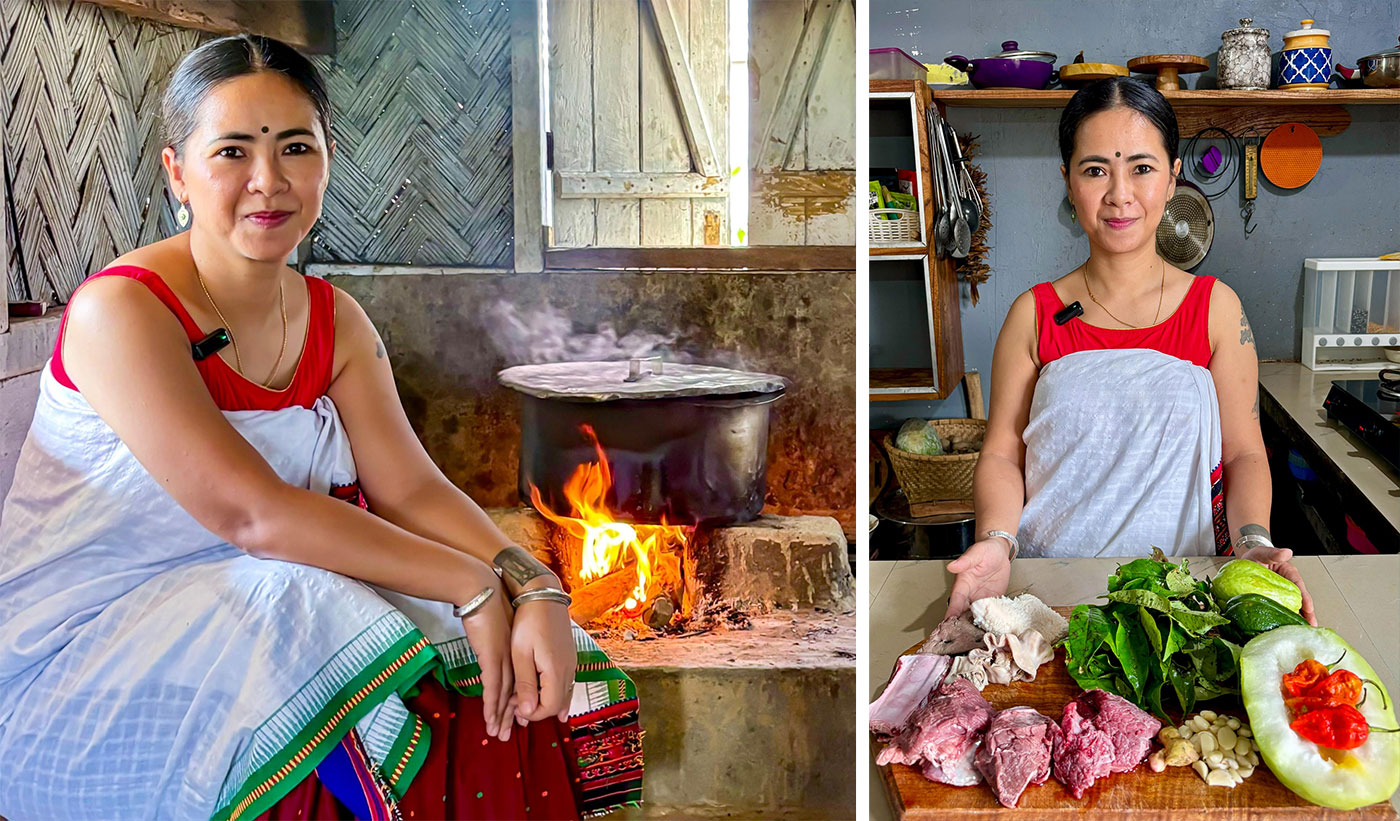
Some days, you are likely to find Avantika Haflongbar pounding a fiery chutney made from sun-dried fish, green chillies, and wild herbs and methodically layering the ingredients into a Shamtho and working them with a Rimin. These traditional wooden tools, passed down through generations, are not just functional objects. They are keepers of memory. On other days, she returns from the bustling Haflong market, her bag heavy with seasonal greens, foraged herbs, and bamboo shoots.
These aren’t merely culinary routines for Avantika; they are rituals of remembrance. Each gesture, each preparation, echoes the rhythm and wisdom of the Dimasa way of life where food is a thread that connects past and present.
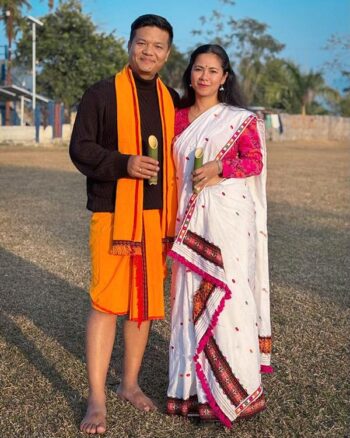
Both Shamtho and Rimin, traditionally carved from mango, jackfruit, or Gambari wood, hold a central place in Dimasa kitchens. From pounding herbs to grinding rice flour, their uses span the everyday to the ceremonial. Whether in wedding feasts or funeral rites, these tools are a reminder of how intimately food is woven into the spiritual and cultural fabric of the Dimasa people.
Avantika belongs to the Dimasa people, one of the oldest Indigenous communities of Northeast India. With an estimated population of just over 260,000 to 300,000, the Dimasa community is primarily concentrated in Dima Hasao, Karbi Anglong, and parts of Cachar in Assam, as well as Dimapur in Nagaland. They speak Dimasa, a Tibeto-Burman language of the Bodo-Garo group. Historically, the Dimasas once ruled parts of Assam through their own kingdom, with ancient capitals at Dimapur, Maibang, and Khaspur—long before colonial cartographies came to redraw the region.
Traditionally organised around clan structures that draw lineage from both parents, the Dimasa people have long upheld practices that are both ecologically sustainable and spiritually rooted. Their cultural identity expresses itself in everything from cuisine and weaving to festivals and music. But like many small communities, their traditions risk erosion in the face of modernity and migration.
It is this fragile space between memory and forgetting that Avantika now inhabits. A graduate of Jamia Millia Islamia, she spent over a decade working in the social development sector in Delhi. But her return to Haflong, a quiet hill town and the headquarters of Dima Hasao district in Assam, located about 296 km from Guwahati, was not driven by nostalgia, but by urgency. Accessible by train and a short taxi ride (around 4.5 hours in total), Haflong became the place where she began to confront a growing void. “I felt something slipping away,” she says. “Our stories, our food, our looms—they weren’t being carried forward.”
In response, Avantika began creating short videos documenting Dimasa food in its most authentic form: meals that are steamed, smoked, or boiled with local herbs, fermented ingredients, and minimal spice. She uses traditional techniques, avoids over-styling, and lets the food and the story speak. Her videos have quietly gone viral, reaching viewers across the country who are as surprised by their simplicity as they are by their depth.
Through her textile initiative Roohi, she also collaborates with women weavers across Dimasa villages reviving lost patterns, supporting livelihoods, and reinforcing pride in traditional craftsmanship. In a time when weaving is often abandoned for other work, Roohi helps ensure that the loom remains a site of cultural continuity.
Avantika’s work is not about performance; it is about presence. Whether she’s sourcing wild greens from the hills or preparing Daono Hain Hon (country chicken cooked with rice flour and chillies), she is restoring visibility to a community that is rarely seen in the national narrative. Hers is a story of return, resilience, and quiet revolution told one meal, one thread, and one memory at a time.
She’s working to ensure her people’s heritage is seen, understood, and respected.
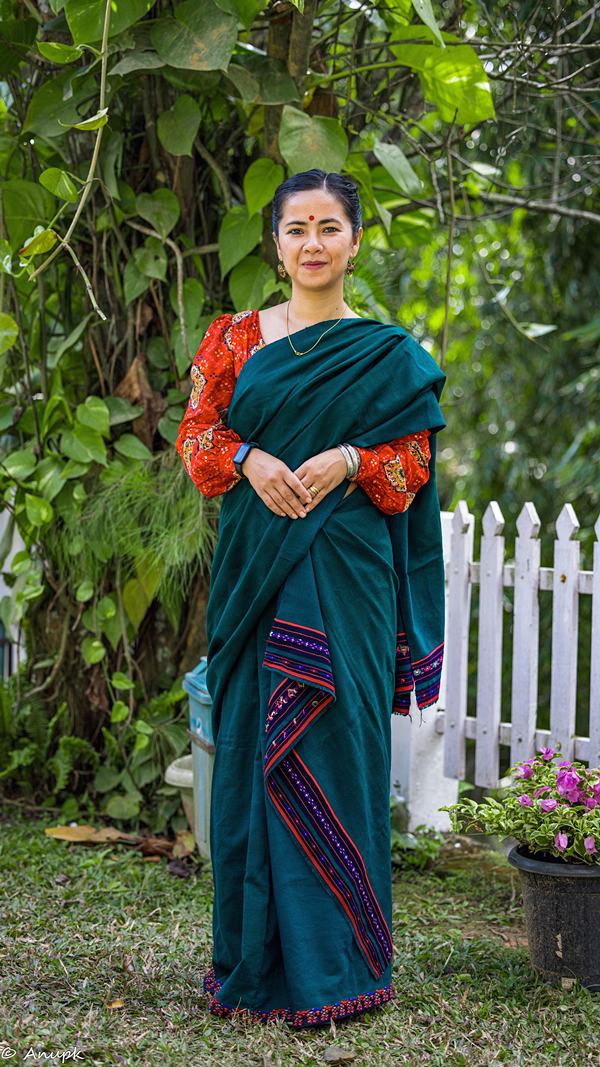
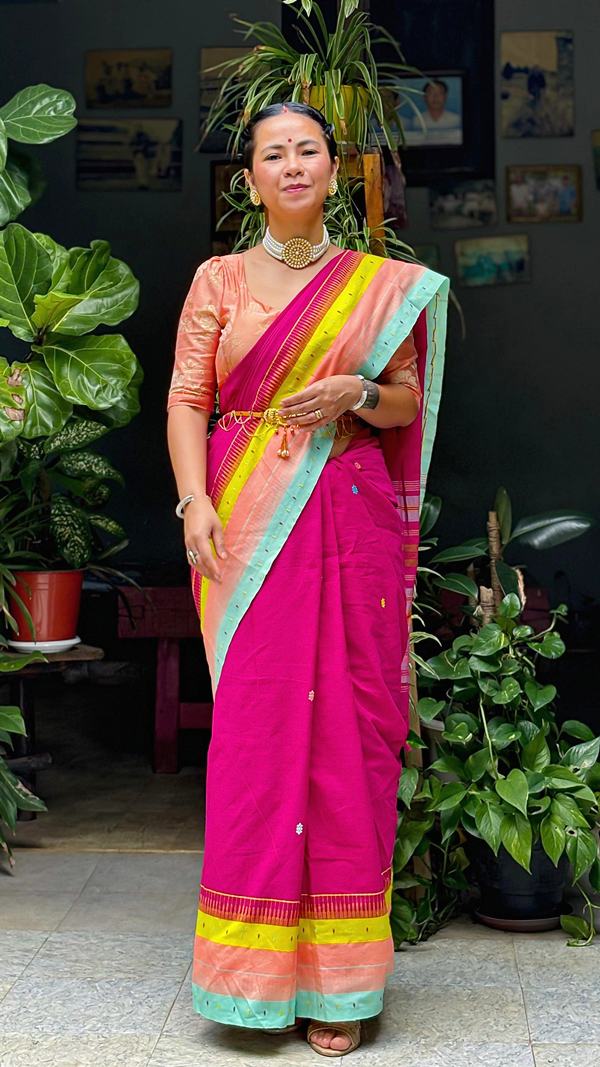
Soon after her return, Avantika co-founded the TRYST Network, an NGO based in Haflong, and launched ROOHI, a textile initiative that works with Dimasa women to revitalise traditional weaving. Once a central part of Dimasa life, weaving was taught at an early age, typically from mother to daughter. Today, that practice is under threat. “Our generation has very few young women weaving,” she explains. “As education and urban migration increase, the knowledge of motifs, techniques, and patterns is quietly disappearing from the villages,” she says.
ROOHI doesn’t just create textiles; it facilitates local production by women who work from their homes or in between tending to their fields. The motifs carry ancestral symbolism, and each piece is the result of slow craftsmanship. For Avantika, fabric is not just material—it’s keeper of her traditions. Each thread offers a connection to a way of life that is deeply rooted, self-sustained, and often overlooked in mainstream narratives of development or design.
Parallel to her work in textiles, Avantika began documenting Dimasa cuisine, recipes that reflect the community’s agrarian rhythm, seasonal ingredients, and a philosophy of simplicity. Her earliest memory of food is intertwined with the Bushu Dima festival, a post-harvest celebration. She recalls her grandmother, “Adai,” carefully removing sticky rice from a bamboo pod and serving it with a sharp tomato chutney made with naphlam—fermented dried fish.
Bushu Dima is a post-harvest festival celebrated by the Dimasa Indigenous community. While different villages observe Bushu independently throughout January, a central celebration is traditionally held at the end of the month. “I still remember how Adai insisted I go with her to witness the festivities—to meet our extended family who would gather there and dance through the night to the rhythms of Khram and Muri (Khram is a drum, and Muri is a flute). The event was massive. I recall the stalls selling traditional Dimasa cuisine, along with a few offering chowmein, boiled eggs, and pakoras a welcome treat for children my age. Adai wanted me to experience our culture through food, music, and art from a young age,” she says.
The central Bushu Dima, held in Haflong each January, was more than a festival. It was a convergence of villages, relatives, and generations. She remembers the rhythm of Khram (drum) and Muri (flute), the smoky aroma of meats, and the wide-eyed excitement of children seeking chowmein or boiled eggs at food stalls. It was here that Avantika first understood food as culture as something carried, performed, and shared.
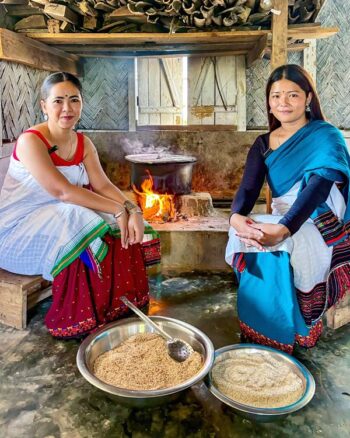
Dimasa food is deeply local. Rice is the staple, but the approach to cooking is subtle and rooted in ecological awareness. Most dishes are boiled, steamed, or smoked. Spices are minimal; flavour comes from techniques and the use of foraged herbs. Fermented ingredients like naphlam, and traditional alkaline water known as khari—made by filtering water through ash from sun-dried banyan bark—are integral.
A defining dish is Daono Hain Hon country chicken slow cooked with rice flour, mustard oil, and locally foraged culantro. It is prepared during most Dimasa rituals, usually accompanied by Judima, the traditional rice wine which recently received the GI tag. Judima is not just a beverage, but a ceremonial offering used in weddings, funerals, and festivals.
Avantika’s food documentation began modestly: simple videos showing how meals were prepared, narrated with context and care. As some of her videos gained traction online, they began attracting viewers far beyond the region. But with visibility came resistance.
“The hate came fast,” she says. “Some people were offended by our use of meat. Others ridiculed the simplicity—boiled vegetables, raw herbs, minimal spice. It made me realise how limited the mainstream perception of food still is.”
She doesn’t pander to trends or polish her content for effect. Her visuals are clean but grounded. There’s no fusion, no exoticism. Instead, every dish comes with a narrative—about its origin, its place in ritual, or the hands that grew the ingredients.
“I’m not interested in clickbait,” she adds. “I want people to see how food holds stories. If you stay long enough, you begin to understand the depth behind a plate.”
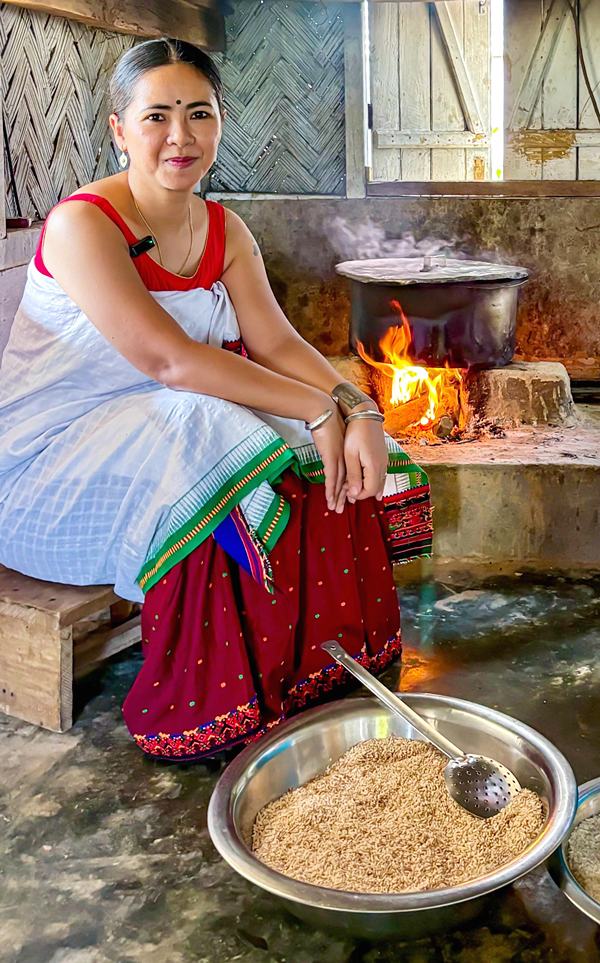
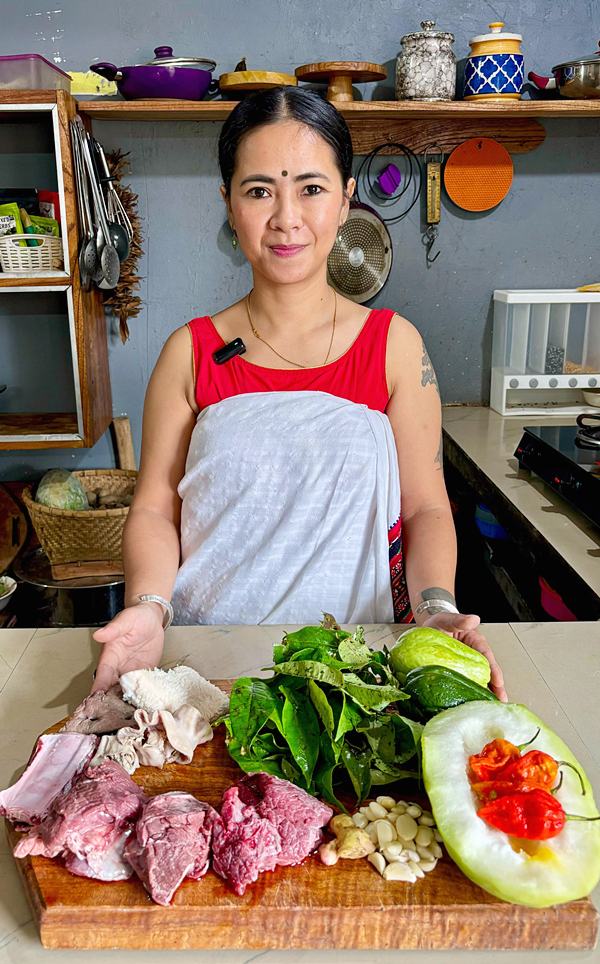
Avantika’s work is as much about enabling others as it is about preservation. Through ROOHI, she creates a direct link between Dimasa weavers and the market, ensuring fair wages and recognition. Many of the women she works with are full-time homemakers or farmers. Weaving gives them a source of income but also reconnects them with identity.
“The Dimasa textile isn’t just a fabric—it’s heritage,” she says. “Each piece carries patience, skill, and the wisdom of generations. I simply help bring it into the light.”
Through her parallel work in food, she offers an entry point into a culture that, though small around 260,000 to 300,000 people has a rich and enduring history. From her kitchen and loom in Haflong, Avantika Haflongbar is quietly proving that cultural continuity doesn’t always need loud declarations. Sometimes, it survives through the quiet act of weaving. Or in the taste of a fermented fish chutney eaten during a festival under open skies.
Know more of Avantika Haflongbar: She documents Dimasa cuisine at @haflongcloudkitchen, revives traditional weaving through @roohiclothing, and curates Indigenous arts at @thebigbangfestival. Watch her on YouTube: yt.openinapp.co/cyemy