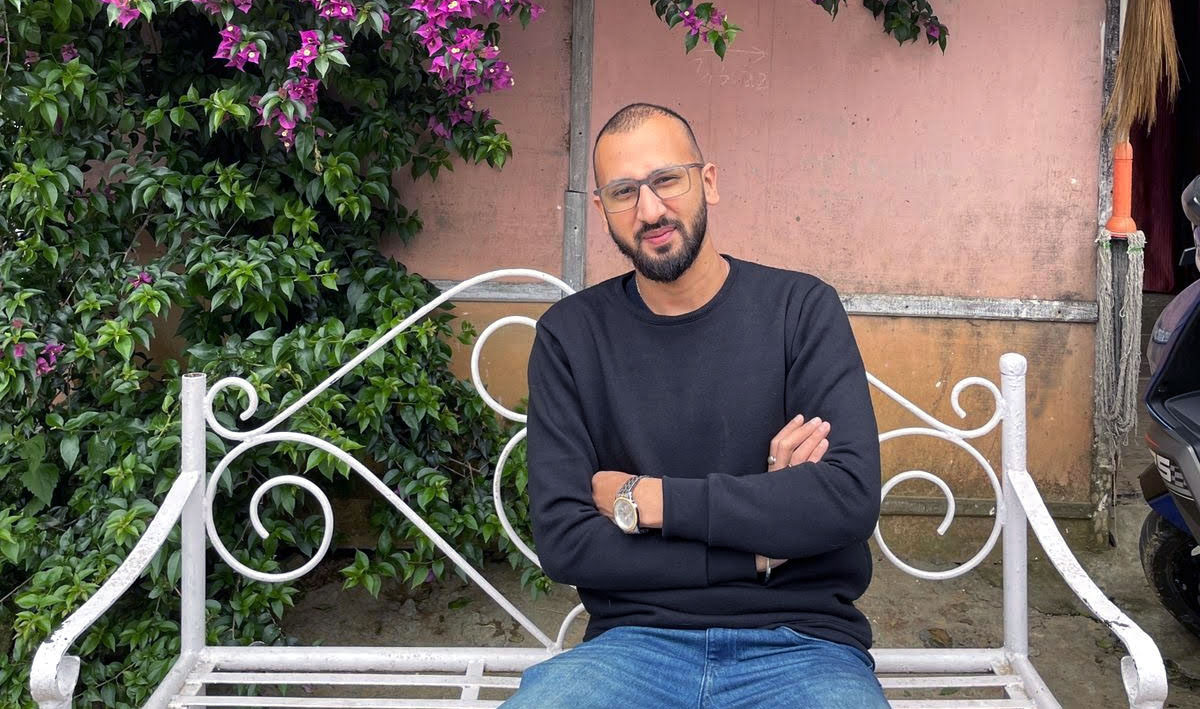
Himangshu Baruah grew up in Assam, where tourism often amounted to little more than a line on a government map or a seasonal influx of visitors to well-known spots like Kaziranga. Despite the region’s vast diversity spanning eight states, each rich in language, culture, and terrain, organised travel opportunities have remained scarce, and even rarer are chances for local communities to build sustainable livelihoods around them.
Baruah, now 29, was born in Tezpur and spent the first 12 years of his life with his grandparents in a small locality called Mazgaon, also known as Baruah Chuburi, in the Tezpur subdivision of Sonitpur district. It’s a chapter of his childhood he still holds closest to his heart, days that were unhurried, deeply connected to the land, and rich with stories passed down through generations. Later, he moved in with his parents, and his father’s transferable job as a Kendriya Vidyalaya teacher meant he lived in different corners of Assam, absorbing more of the state’s many layers.
That early movement across the state gave him an unfiltered glimpse of its richness be it rural and urban, forest and hill, market and monastery. It made him see how much of the region remained hidden from the wider world.
After completing his B. Tech in Computer Science from Pondicherry University, Baruah returned home. Like many young people from the Northeast, he had seen the pull of cities outside and the lack of structure back home. But instead of leaving for good, he chose to stay and build something of his own, something that could make travel in the Northeast more accessible, better understood, and locally owned.
With a simple idea and all his savings: 25 lakhs, Baruah took a leap of faith to build Finderbridge: a platform designed not just to connect travellers with destinations, but with the people and stories that make those places come alive. What began as a bold risk has since grown into one of Northeast India’s most recognizable tourism startups. Today, Finderbridge weaves together homestays, cultural experiences, logistics, and storytelling into a cohesive network, opening lesser-known corners of the region to visitors, while offering local communities a tangible future in tourism.
That future is no longer just a dream. In 2022 alone, the region saw over 118 lakhs domestic and 1 lakh international visitors. Tourism has started to emerge as a major industry in the Northeast, with experts predicting even more explosive growth in the coming decades. Government initiatives dating back to the Ninth Five Year Plan laid down a clear foundation, ranging from infrastructure and product development to human resource training, environmental preservation, and stronger private sector participation. But what was needed was someone to connect those dots on the ground.
The path hasn’t been easy. Building a startup in the region meant facing everything from limited infrastructure to minimal policy support. But Baruah stayed the course. Finderbridge is now recognised by Startup India and has represented the region on platforms as far away as Dubai, Oxford, and Times Square in New York. These are milestones that matter not just to the business, but to a region often left out of the national conversation.
But for Baruah, the work is still rooted in the ground in making sure that what’s being built reflects the place it comes from, and that the benefits are shared. He speaks often about collaboration, and how tourism in the Northeast should not be about isolated projects, but about collective participation.
This is not a story of a startup trying to scale at all costs. It’s the story of someone trying to create a structure where there was none, and to do it in a way that others can follow. Finderbridge is still growing, still adapting. But at its core is a steady belief: that tourism in the Northeast can belong to the people of the Northeast and that someone has to begin by showing how.
In an interview with The Northeast Stories, Himangshu Baruah talks about that disconnect, challenges and how tourism sparked something in him.
The tourism sector in Northeast India continues to face deep-rooted challenges that limit its growth, especially around accessibility, perception, and policy support. Though air connectivity is gradually improving, it remains concentrated in a few major cities like Guwahati and Imphal, with expensive fares and weak intra-regional links making remote areas hard to reach. Poor last-mile connectivity and unreliable public transport further restrict access to many of the region’s most stunning but lesser-known destinations. Beyond logistics, the region struggles with how it's perceived, often misunderstood or reduced to outdated stereotypes, it is still seen by many as unsafe or inaccessible, overshadowing its rich cultural diversity and natural beauty. Media narratives tend to highlight conflict rather than community, contributing to a lack of domestic and international tourist confidence. On the policy front, although initiatives like the Act East Policy exist, implementation is sluggish, and regulatory roadblocks like complicated entry permits in states like Arunachal Pradesh deter even interested travellers. A coherent, well-funded tourism strategy tailored to the Northeast’s unique landscape is still missing. Finderbridge is stepping into this gap, helping to shift perception and open access by offering immersive, locally rooted experiences that let the region speak for itself.
Starting Finderbridge in 2017 was a leap into the unknown, I had no business background, just a strong sense that tourism in the Northeast could be something more. I poured in my scholarship money to get it off the ground, and for a long time, I was doing everything alone overseeing calls, building the website, convincing homestays, managing bookings, all from my laptop. There was no playbook, and funding was almost impossible to come by, especially when most investors did not really understand the region or believe in its potential. The infrastructure was scattered, it was hard to find trained people who saw tourism as a real career, and even harder to create a dependable network of guides, stays, and transport.
But over time, things started to shift. Social media became our biggest tool. I got my first client through a tweet, which changed everything. Digital platforms gave us a way to tell stories and reach people who had never heard of places like Majuli or Ziro. Slowly, permits and registrations moved online, and though bureaucracy still drags, it’s a bit less painful than before. We have grown into a small team now (ten of us by 2024) and built strong local partnerships that make the work more grounded and real. The big challenge is still funding; there's still hesitation when it comes to backing ventures focused on the Northeast, but the landscape is changing. There’s more awareness, more conversations, and if nothing else, more people willing to listen.
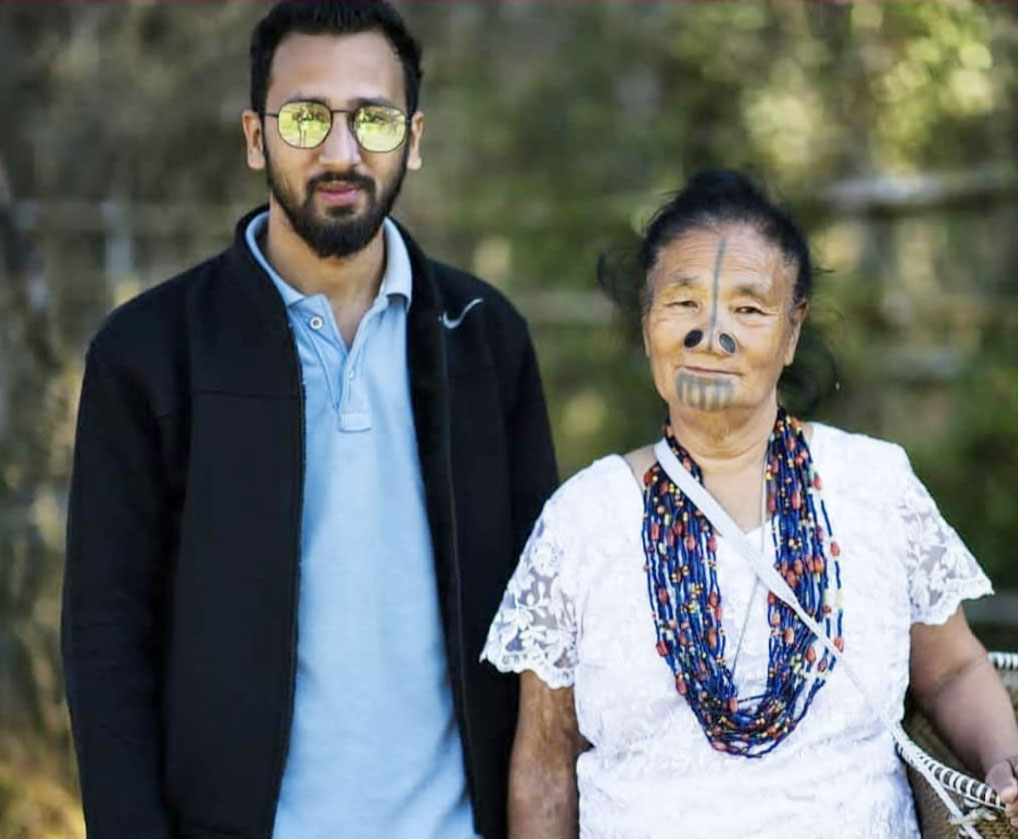
At Finderbridge, everything we build starts with the land and the people. It is about growing tourism in a way that does not harm what makes the Northeast so special. In fragile places like Dzukou and Aeyo Valley, we keep group sizes small, avoid single-use plastics, and follow local conservation rules to make sure our presence does not leave a scar. We collaborate closely with communities, especially in culturally rich areas like Ziro Valley, where travellers meet Apatani farmers and learn from their traditions without turning their lives into performances. Growth for us is not about volume, it is about depth. We train local guides, partner with village groups, and make sure the income stays in the region. We regularly check how we are doing on waste, energy use, and overall impact and we reinvest into conservation, whether it is supporting wildlife corridors in Assam or improving water systems in homestays. It is not fast work, but it is honest, and it is the only way we know to build something that lasts without losing what matters.
For tourism startups in the Northeast to grow in a way that lasts, the right support system has to be in place starting with access to funding, which is still incredibly hard to come by, especially when most investors don’t fully understand the region or its potential, and like with Finderbridge, many of us start with whatever personal savings we have because there’s no real alternative; incubators that focus specifically on Northeast tourism, like IIM Shillong’s, can help bridge that gap by offering mentorship and connecting us with investors who actually care. But no amount of planning works without infrastructure, better roads, reliable transport, affordable flights, and small but meaningful investments like solar-powered homestays or village-run waste systems could completely change how travel works here. The policies need to catch up too; permits for places like Arunachal are still too complicated and scattered, and a shared tourism vision across states would cut through a good deal of that red tape. What’s also missing is national-level visibility, campaigns that can reintroduce the Northeast to the rest of the country and the world, not just through glossy ads but through real, grounded storytelling; tools for better digital outreach could give local startups the same edge as global ones. All of this, money, roads, policies, visibility, it’s not about making tourism big, but making it better, fairer, and built to last.
At Finderbridge, we’ve always believed tourism should begin with the people who call these places home, so every experience we offer is built hand-in-hand with local communities from Khasi villages in Meghalaya where homestays and tours are run by cooperatives, to Apatani households in Arunachal where guests stay with families and learn firsthand about their way of life, ensuring that most of the earnings stay with them and aren’t lost to middlemen; we focus on training young locals as guides, storytellers, and small business owners so they aren’t just part of the picture but leading it, and we don’t design any cultural experience without the community shaping it with us, like our Hornbill Festival journeys in Nagaland, which are coordinated directly with local organizers to keep them true to the spirit of the festival; when people take part in sharing their own heritage, it doesn’t just protect culture, it deepens pride and belonging, and by keeping locals at the centre of every step from planning to hosting we build tourism that’s not only fair and rooted, but one that lasts.
My first client came through Twitter. That moment showed me the power of digital storytelling. Social media became our loudest voice when we had no marketing budget; if you can tell your story well, people will listen. Building a team was the next big step: slow, intentional, and rooted in shared purpose. Every person at Finderbridge today brings something local, something lived, and that is what has made all the difference.
If you are building something, stay patient. The right pace is your own. Look for support in unexpected places: government schemes, partnerships, even crowdfunding and reinvest not just money but energy into your idea. Believe in your region, your story, and your ability to build something that matters. The Northeast is full of possibilities. You just, must start.